Best Coffee for Nurses: What Actually Works on Long Shifts
Nursing shifts don't care about your sleep schedule. You're up at 4am or you're three hours into a night shift wondering how you're going to make it to morning. Coffee isn't optional — but the wrong coffee makes it worse.
Here's what actually works: which roasts hold up, how to time your caffeine so you don't crash, and what to avoid when you need to stay sharp for 12 hours.
Browse the full lineup: All Bilge Brew roasts →
The Real Problem With Most Nurse Coffee Routines
Break room coffee is usually stale, over-extracted, and sitting on a burner for two hours before you pour it. That's not a caffeine problem — that's a quality problem. Bitter, flat coffee that makes your stomach turn mid-shift isn't fuel. It's punishment.
Two things that actually fix this:
-
Better beans. Fresh specialty grade coffee tastes cleaner, extracts more evenly, and doesn't turn harsh when it sits. You can actually drink it black without grimacing.
-
Smarter dosing. One massive cup dumped into an empty stomach at shift start isn't the move. Smaller amounts spaced through the shift keeps you steadier and avoids the spike-and-crash cycle.
Best Coffee for Early Morning Shifts (Pre-Dawn Starts)
You need something that's strong enough to cut through the fog but won't wreck your stomach before you've eaten anything. A medium-dark roast is the sweet spot — more body than a light roast, less harsh than a full dark roast on an empty stomach.
Best pick: General Quarters — Medium Dark Roast. Strong, clean, holds up through refills. The kind of coffee that works whether you're making it at 4:30am before you leave or batch-brewing for the shift ahead.
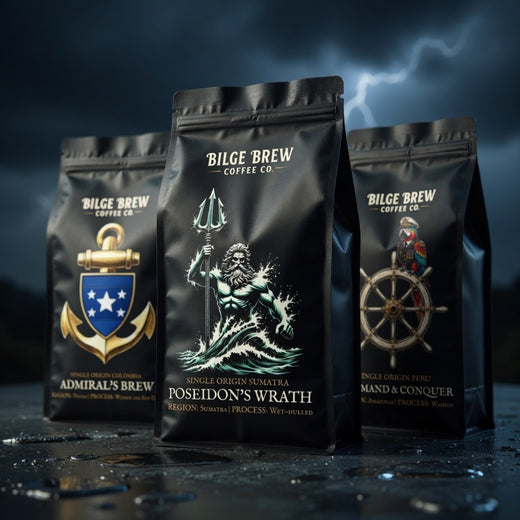
Also solid: Admiral's Brew — Colombia Single Origin — smoother and naturally sweet, easier on the stomach if you're sensitive to acidity on early mornings.
Best Coffee for Night Shift Nurses
Night shift is a different problem. You're not just tired — your body is actively fighting you. Cortisol is low, melatonin wants to kick in, and the caffeine you're used to during the day hits differently at 2am.
What works:
-
Cold brew or concentrate-style coffee — smooth, low acidity, easy to sip slowly over hours without the harshness of hot drip that's been sitting
-
Higher caffeine options when you need a real hit — Robusta-blend coffee has naturally more caffeine than standard Arabica
-
Smaller doses more often — a half-cup every 2 hours is more effective than one massive cup at shift start
Best pick for nights: Atomic — Medium Roast with Robusta. Higher caffeine, medium roast so it's not harsh, built for people who need it to actually work.
For cold brew at home: How to Brew Cold Brew Coffee — batch it once, have it ready all week.
Best Coffee for 12-Hour Shifts (The Long Haul)
Twelve hours requires pacing, not just strength. The goal is steady focus without a crash at hour eight.
Framework that works:
-
First cup: medium or medium-dark drip, with food if possible
-
Mid-shift: smaller pour — 6-8oz, not a full mug
-
Late shift (if needed): cold brew or espresso shot — concentrated, controlled dose
-
Last 4 hours: cut off caffeine if you're sleeping within 6 hours of shift end
Best all-day coffee: General Quarters for drip refills, Anchor Espresso for concentrated mid-shift hits.
Full guide on caffeine pacing and brew method matching: Best Coffee for Long Shifts, Early Mornings, and Night Work.
What to Brew When You Have Basically No Time
Most nurses aren't making pour-over in the break room. Here's what actually works in a real hospital environment:
-
Single-serve cups — fast, consistent, no cleanup. Use the smallest cup size setting for the strongest result. Single-Serve Cups collection.
-
Pre-made cold brew — batch at home Sunday night, bring in a bottle, pour over ice at work. Zero prep on shift.
-
French press at home before leaving — 4 minutes, one cleanup, better than anything the hospital has. Guide: Best French Press Done Right.
Espresso at Home — Worth It for Nurses?
If you have 10 minutes before a shift and a decent setup, yes. A double shot is ~126mg caffeine in 2oz — concentrated, fast, effective. The key is having beans dialed in so you're not troubleshooting at 4:30am.
Best espresso bean for nurses: Anchor Espresso — dark, consistent, wide extraction window. Forgiving to pull even when you're half asleep.
If your shots keep coming out bitter or weak: Bitter Espresso Fix and How to Dial In Espresso.
Why Bilge Brew Exists for People Like You
Bilge Brew was started by a Navy veteran and registered nurse — someone who has run on bad coffee through long shifts and knows what it costs when your fuel doesn't hold up. The brand was built for people who show up no matter what: veterans, nurses, first responders, and anyone else whose job doesn't stop because they're tired.
No shortcuts on sourcing. Specialty grade beans, roasted to order, shipped fresh.
Read the founder story → | What veteran-owned actually means →
Quick Picks by Situation
FAQs
What's the best coffee for a 12-hour nursing shift?
Something you can pace through the shift — not just one massive cup at the start. General Quarters for drip refills, Atomic when you need a real hit. Space doses every 2–3 hours instead of front-loading.
Is espresso better than drip coffee for staying awake on shift?
Not necessarily — it depends on how much you drink. A double shot is ~126mg caffeine. A 12oz drip cup is ~140mg. Espresso is more concentrated per ounce but drip wins per serving if you're drinking a full mug. Espresso is better when you want a controlled, fast dose mid-shift without committing to a full cup.
What coffee is easiest to make before a shift with no time?
Pre-made cold brew brought from home, or single-serve cups at work. Both require zero active prep at the moment you need it. Single-Serve Cups — use the smallest cup size setting for the strongest result.
Does dark roast have more caffeine for night shift?
Not meaningfully — roast level has minimal effect on caffeine. What matters is dose (grams of coffee) and bean type. If you want more caffeine, choose a Robusta-blend like Atomic or increase your dose. Full breakdown: Espresso vs Drip: Caffeine Explained.
Why does hospital coffee taste so bad?
Usually three reasons: commodity-grade beans, pre-ground coffee that's been sitting, and a pot that's been on a burner for hours. None of that is fixable in the break room. Bringing your own is the only real answer.
Stay Sharp
New Roasts. Better Coffee. First in Your Inbox.
Exclusive discounts, new drops, early access, and coffee worth knowing about. No spam. No drama.
⚓ You're in. First to know, first to brew.
No drama. Unsubscribe any time.