Best Coffee for Long Shifts, Early Mornings, and Night Work
Long shifts don’t need “more caffeine.” They need a better plan: dose, timing, and a coffee that stays strong without turning bitter. Here’s how to stay sharp on early starts, 12s, and night work.
6 min readFrom the Bilge (blog)
Best Coffee for Long Shifts, Early Mornings, and Night Work
If your coffee hits hard for 30 minutes and then you crash, that's not "you." That's a bad match of dose + timing + brew method.
Long shifts don't require the "strongest" coffee. They require steady output: enough caffeine to stay sharp, without pushing you into jitters, reflux, or a mid-shift faceplant.
Roast color is not a caffeine cheat code. The difference between light and dark roast caffeine is small enough that your scoop size and brew ratio matter more than the roast label.
What roast level does change is flavor:
Light: brighter, more snappy, more acidity for some people
Medium: balanced, easiest daily driver
Dark: heavier body, more roast notes — can get harsh if pushed too far
The other variable nobody talks about is freshness. Most coffee sitting in your cabinet was roasted months before you opened it. By the time you brew it on a long shift, the peak flavor and clean caffeine delivery are already gone. If your morning cup isn't holding up through hour 8, the bean is likely the problem. We built Bilge Brew specifically for people who can't afford a bad cup when it matters. Try the Crew Sampler Bundle and find your roast.
If you're still buying grocery-store beans for shift work, you're paying for stale convenience. The honest difference: Roasted-to-Order vs Grocery Store Coffee.
One more thing most people skip: if your coffee tastes different shift to shift even with the same beans and recipe, check your grinder. Oil buildup and packed fines are silent flavor killers — especially when you're grinding daily. Takes 10 minutes to fix: how to clean a coffee grinder the right way.
Recommended Bilge Brew Picks for Long Shifts
1) ATOMIC — built for people who need higher caffeine. If you're dragging on nights, this is the "don't talk to me yet" option: Atomic.
2) GENERAL QUARTERS — strong drip that stays clean enough to drink black and holds up through refills: General Quarters.
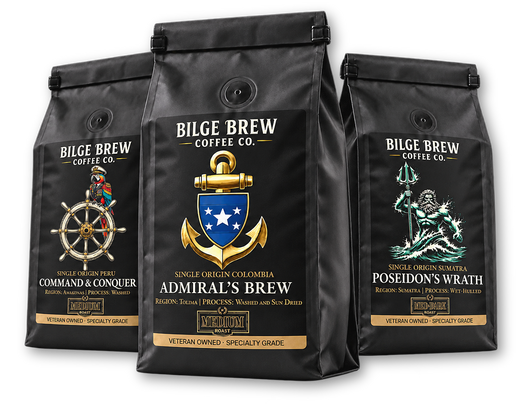
3) ADMIRAL'S BREW (Colombia) — smooth medium roast for long sips and steady pacing. Great if you hate harsh coffee: Admiral's Brew.
4) ANCHOR ESPRESSO — dense, heavy-bodied espresso. Solid if you like your coffee dark but not burnt: Anchor Espresso.
Night shift is about steady dosing and a brew method you can drink for hours. Cold brew is a common win — smooth, easy to batch, no bitterness. Use this: Cold Brew Guide. If you need higher caffeine, Atomic is the obvious pick.
Does light roast really have more caffeine than dark roast?
Not in a way that matters for real life. The bigger driver is how much coffee you use and how you brew it. Roast level mostly changes flavor: Roast Choice Guide.
How do I get stronger coffee without bitterness?
Use a smaller brew size, increase dose slightly, and don't over-extract. Start here: Avoid Bitter Coffee.
What's the best brew method for long shifts?
Drip for refills, cold brew for smooth stamina, espresso for concentrated hits. Match coffee to your setup: Brew Methods.
I only have a single-serve machine at work. Am I stuck with bad coffee?
No. Use the smallest cup size, preheat the mug, and keep the machine clean. Full walkthrough: K-Cup® Coffee, But Better.
What should I buy if I'm not sure yet?
Start with a dependable daily driver — General Quarters. Then add either Atomic (max caffeine) or Admiral's Brew (smooth all-day) depending on what your shift demands.
Is this coffee veteran-owned?
Yes. Bilge Brew was started by a Navy veteran and RN — built for people who show up early, work long, and need coffee that does the same. Read the founder story.
Stay Sharp
New Roasts. Better Coffee. First in Your Inbox.
Exclusive discounts, new drops, early access, and coffee worth knowing about. No spam. No drama.
⚓ You're in. First to know, first to brew.
No drama. Unsubscribe any time.
Fresh-roasted coffee
Ready for a better cup?
Explore Bilge Brew coffees roasted after order and built for people who care what lands in the cup.