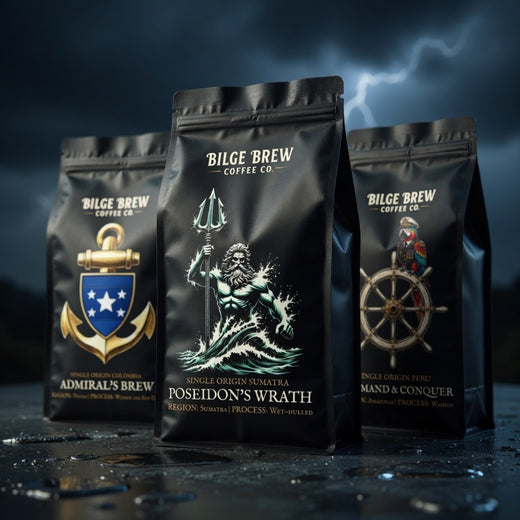
Single Origin vs Blend: What’s the Difference (and Which Should You Choose)?
Single origin vs blend explained without coffee-snob talk. Learn the real difference, who each is for, and Bilge Brew picks.
Single origin = coffee from one country/region (sometimes one farm).
- Choose single origin if you want: unique flavor, origin character, variety
Blend = coffees combined for a consistent flavor profile.
- Choose blend if you want: consistent taste, “everyday reliable,” easy brewing
Single origin vs blend (quick comparison)
| Category |
Single origin |
Blend |
| What it is |
Coffee sourced from one origin (country/region; sometimes one farm). |
Two or more coffees combined to build a consistent profile. |
| What it tastes like |
More distinct “origin character” — you’ll notice clearer differences cup to cup. |
More rounded and predictable — built to taste similar every time. |
| Consistency |
Varies more (by crop/season/lot). |
Most consistent (that’s the point of a blend). |
| Best for |
Black coffee drinkers, pour-over fans, anyone who wants to explore flavor. |
Daily drinkers, offices, families, “just give me a solid cup” people. |
| Easiest brew |
Great for pour-over and drip when you want clarity and clean flavor. |
Great for drip, batch brewers, and refills when you want no surprises. |
| Espresso note |
Can be excellent, but will feel more “distinct” and may require dialing in. |
Often easier to pull consistently. For Bilge Brew espresso picks, see Anchor Espresso and Red Alert!. |
Bilge Brew picks
Single origin picks: Signature Roast (Peru), Admiral’s Brew (Colombia), Mess Decks (Mexico), Bilgewater (Bali).
Blend picks: Liberty, Maritime Roast, General Quarters, flavored options like Smooth Sailing and Cup of Joe (Mocha).
FAQ
Is single origin always better?
No. Single origin is better if you want distinct, origin-driven flavor. Blends are better when you want consistency and an easy daily cup.
Why do blends exist?
To create a dependable flavor profile that stays consistent across brews and refills—especially useful for everyday drinking and households.
What’s easier to brew?
Blends are usually more forgiving. Single origins can be just as easy, but they’ll show differences in grind and brew method more clearly.
Best for espresso?
If you want easy consistency, start with Anchor Espresso. If you want a more lively, complex shot, go with Red Alert!.
Want to know more?
Best coffee for long shifts, early mornings, and night work
Single Origin Coffee Explained (Without the Coffee Snob Talk)
How to Choose the Right Coffee Roast for You