Photo by 'Kevin Butz' on Unsplash.com
Sour Espresso: Causes and Fixes (Under-Extraction Checklist)
A persistent, puckering sensation that overwhelms the pleasant bitterness of coffee, sourness in espresso is a common ailment that can plague even the most enthusiastic home barista. This undesirable flavor profile is not to be confused with the desirable characteristic of bright acidity, a nuanced counterpoint to sweetness and bitterness that elevates certain coffees. Instead, sourness indicates a fundamental imbalance in the brewing process, a sign that the coffee grounds have not yielded their full spectrum of soluble compounds. Understanding the underlying causes and implementing a systematic approach to rectification is key to achieving a balanced and delicious espresso.
Unraveling the Mystery of Sour Espresso
Sourness, in the context of espresso, is often described as tasting like unripe fruit or even lemon. It lacks the pleasant, complex tang of fine acidity. Think of it like trying to ripen a green banana; you get sourness instead of well-developed sweetness. Bright acidity, on the other hand, is a pleasant sharpness, a vibrant note that can range from citrusy to berry-like, depending on the coffee bean's origin and processing. It’s the difference between biting into a forgotten, sour apple on the tree and the zesty brightness of a perfectly ripe grapefruit.
The Underlying Cause: Under-Extraction
The fundamental reason behind a sour espresso is under-extraction. Espresso brewing is a race against time. Hot water rushes through a finely ground bed of coffee, dissolving soluble compounds. These compounds are released in stages. First come the acids, then the sugars, and finally the deeper, more complex compounds that contribute to bitterness and body. If the water spends insufficient time in contact with the coffee, or if the water cannot effectively penetrate the coffee bed, it will primarily extract those early-arriving acids, leaving the desirable sweetness and bitterness underdeveloped. The result is a shot that tastes sharp, thin, and unpleasant – the hallmark of sourness.
Identifying the Symptoms of Under-Extraction
Beyond the obvious sour taste, under-extracted espresso often exhibits other tell-tale signs. The shot might flow too quickly, running like water rather than the thick, syrupy stream expected. It may also appear pale in color, lacking the rich, reddish-brown hue of a well-pulled shot. The crema, the reddish-brown foam that crowns a proper espresso, might be thin, wispy, or dissipate quickly. These visual cues, coupled with the unpleasant taste, paint a clear picture of an under-extracted beverage.
The Under-Extraction Checklist: A Systematic Approach
To effectively address sour espresso, a methodical approach is essential. Trying to fix everything at once is like trying to steer a ship by pulling on every rope simultaneously; it leads to chaos. The "Fix Ladder" provides a structured methodology to isolate the problem and implement targeted solutions. This ladder prioritizes the most common causes and guides you through adjustments one at a time.
The "Fix Ladder": Adjusting One Variable at a Time
The Fix Ladder is designed to tackle the most probable culprits for under-extraction first, progressing through potential issues in order of their likelihood and impact. This systematic process prevents confusion and ensures each adjustment is evaluated independently.
1. Grind Size: The Foundation of Extraction
The most common cause of sour espresso is a grind that is too coarse. A coarser grind presents less surface area for the water to interact with, allowing it to flow through too quickly. Imagine trying to dissolve sugar in water; if the sugar crystals are large, they will dissolve much slower than finely ground sugar. Similarly, if coffee grounds are too coarse, the water will not have enough time to extract the desirable sugars and bitters before exiting the portafilter.
How Grind Size Affects Extraction
The fineness of your coffee grind is arguably the most critical factor in controlling the flow rate and contact time during espresso extraction. A grind that is too coarse is a fast track to sourness. The water can pass through the larger coffee particles with minimal resistance, resulting in a short brew time and a significantly under-extracted shot. The precious compounds responsible for sweetness and balanced bitterness are left behind in the coffee bed.
Adjusting the Grind
The solution is straightforward: grind finer. Aim for a grind size that resembles granulated sugar or even slightly finer, but not a powder. The ideal grind, however, is highly dependent on your specific espresso machine, grinder, and even the coffee beans themselves. It is a process of iterative refinement. Start by making a small adjustment to your grinder – moving it one or two notches finer. Pull another shot and evaluate the taste and flow rate. If it’s still sour and flowing too fast, grind even finer. Continue this process until the sourness begins to recede and the flow rate slows to a more desirable pace.
2. Brew Ratio: The Solvent to Solute Balance
Once you have dialed in your grind size, the next variable to consider is the brew ratio. This refers to the ratio of dry coffee grounds (dose) to the resulting liquid espresso (yield). An incorrect brew ratio, particularly by yielding too much espresso from a given dose, can also lead to under-extraction and sourness. If the water runs through the coffee bed too quickly and encounters it for too short a time, it simply won't have enough opportunity to extract the full spectrum of flavors.
Understanding Brew Ratio and Extraction
A common starting point for espresso is a 1:2 ratio, meaning for every gram of coffee grounds, you aim for two grams of liquid espresso. For example, 18 grams of coffee grounds yielding 36 grams of espresso. If you are yielding significantly more liquid than this (e.g., 18 grams of coffee producing 50 grams of espresso), it indicates that the water has spent too little time interacting with the coffee. This encourages under-extraction and highlights the sourness.
Adjusting the Brew Ratio
To correct for an overly high yield, you have two primary options: either increase your dose (add more coffee grounds) or decrease your yield (stop the shot earlier). Following the Fix Ladder, the next step after grind is to focus on the ratio. If your grind is dialed in and the shot is still sour, experiment with reducing your yield. Aim to stop the shot when the liquid espresso has about doubled the weight of your coffee grounds. If you are still experiencing sourness and the flow appears too fast even at this reduced yield with your current grind, you may need to revisit the grind size, but for now, focus on the ratio by stopping the shot sooner.
3. Water Temperature: The Engine of Extraction
If grind size and brew ratio are dialed in and sourness persists, water temperature becomes a prime suspect. Water temperature is a critical element in dissolving coffee solubles. If the water is too cool, it will not have sufficient energy to effectively extract the desirable sugars and compounds, leading to under-extraction and sourness. Imagine trying to dissolve rock candy in lukewarm water versus boiling water; the latter will be far more efficient.
The Impact of Temperature on Solubility
Higher water temperatures generally increase the rate at which compounds dissolve from coffee grounds. Espresso machines typically operate within a range of 195°F to 205°F (90°C to 96°C). If your machine's temperature is consistently at the lower end of this spectrum, or if it's not maintaining a stable temperature, it can contribute to under-extraction and the resultant sourness.
Tuning Water Temperature
Adjusting water temperature can be challenging depending on your espresso machine. Many entry-level machines have fixed temperatures. However, on machines with temperature control, experiment by increasing the temperature incrementally. If you make the adjustment, pull another shot and assess the change in taste and flow. If the sourness diminishes and the flavor profile becomes more balanced, you are on the right track. Conversely, if you increase the temperature too much, you risk over-extraction and bitterness.
4. Puck Preparation: The Unsung Hero
The final rung on the primary Fix Ladder addresses puck preparation. This encompasses how evenly the coffee grounds are distributed within the portafilter basket and how consistently the puck is tamped. An uneven coffee puck is like a road with many potholes; the water will find the easiest path of least resistance, channeling through those areas and leaving other parts of the puck untouched. This uneven extraction is a direct cause of under-extraction in certain areas and over-extraction in others, leading to a flavor profile that is often a confusing mix of sourness and bitterness.
The Importance of Even Distribution and Tamping
When coffee grounds are not uniformly distributed or tamped, water will prioritize the less resistant paths. This phenomenon, known as channeling, results in some grounds being washed through with insufficient contact time (under-extraction and sourness), while others might be exposed to a disproportionately high water flow, leading to over-extraction and bitterness. A perfect distribution and tamp create a level playing field, ensuring consistent water contact across the entire coffee bed.
Brewing coffee is an art, but it's also a science. Find out why your brew routine might be hurting your cup's taste and quality.
Refining Puck Preparation Techniques
Focus on creating an even, level bed of coffee grounds before tamping. Techniques such as using a WDT (Weiss Distribution Technique) tool to break up clumps and evenly distribute the grounds are highly effective. After distributing, tamp with consistent pressure and ensure the tamper is level. The goal is to create a dense, uniform puck. If you suspect channeling might be an issue, observe the flow of your espresso. If it spurts erratically from one side of the spouted portafilter or pours unevenly from a naked portafilter, it’s a strong indicator of poor puck preparation.
Signs You Have Fixed It
The ultimate confirmation that you have successfully tackled sour espresso lies in the sensory experience. The sourness should dissipate, replaced by a balanced sweetness and pleasant bitterness. Learn more about fixing sour espresso taste here.
Common Mistakes to Avoid
| Mistake |
Impact |
Prevention |
| Not testing code before deployment |
Potential bugs and errors in production |
Implement thorough testing procedures |
| Ignoring user feedback |
Poor user experience and dissatisfaction |
Regularly gather and act on user feedback |
| Overlooking security measures |
Risk of data breaches and cyber attacks |
Implement robust security protocols |
| Not documenting code and processes |
Difficulty in understanding and maintaining code |
Enforce documentation standards |
In the pursuit of perfect espresso, it is easy to fall into certain traps that can hinder progress. Understanding these common mistakes can help you stay on the right path.
The "All at Once" Syndrome
One of the most frequent errors is attempting to adjust multiple variables simultaneously. If you change your grind size, dose, and brew time all in one go, you will have no idea which adjustment led to the desired outcome (or lack thereof). This is akin to treating multiple symptoms with different medications without identifying the root cause of the illness.
The Power of Single Adjustments
Adhering to the Fix Ladder, changing only one variable at a time is paramount. If you adjust your grind, pull a shot, and it's still sour, then adjust your ratio, pull another shot, and so on. This methodical approach allows you to isolate the impact of each change and learn how each variable affects your espresso. By making one adjustment, evaluating its effect, and then moving to the next, you build a deeper understanding of your brewing process and ultimately achieve more consistent and delicious results.
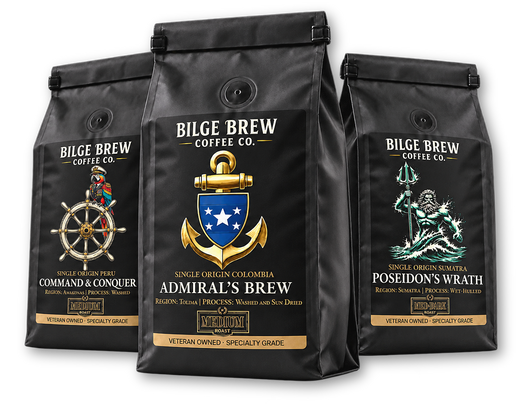
If you care about quality espresso, sourced ethically...find out why i started Bilge Brew Coffee Co.
FAQs
What does "sour" taste like compared to "bright acidity" in espresso?
Sourness in espresso is often described as a sharp, unpleasant taste, similar to sour milk or unripe fruit. On the other hand, bright acidity refers to a pleasant, tangy flavor that adds complexity and liveliness to the espresso.
What are the most common causes of sour espresso, in order of likelihood?
The most common causes of sour espresso, in order of likelihood, are: 1) Grind too coarse, 2) Low brewing temperature, 3) Low yield, and 4) Uneven puck density.
What is the recommended fix ladder for under-extracted, sour espresso?
The recommended fix ladder for under-extracted, sour espresso is to first adjust the grind size, then the coffee-to-water ratio, followed by the brewing temperature, and finally the puck preparation. It's important to make one adjustment at a time to accurately diagnose and fix the issue.
How can you tell if you've successfully fixed the sour espresso issue?
You can tell if you've successfully fixed the sour espresso issue by tasting the espresso for a balanced flavor profile and observing the flow of the espresso during extraction. A properly fixed espresso should have a more balanced taste and a smoother, more consistent flow.
What are some common mistakes to avoid when trying to fix sour espresso?
Common mistakes to avoid when trying to fix sour espresso include changing the dose, grind, and extraction time all at once. It's important to make one adjustment at a time to accurately diagnose and address the issue.
Nothing beats a strong cup of coffee for early mornings. For those who value more than just a caffeine jolt, a veteran owned coffee brand is worth a look. Enter Bilge Brew Coffee Co. — a Navy-themed delight crafted by those who know what it's like to burn the midnight oil.
Table of Contents
Best Coffee for Early Mornings
Starting your day with the right bean is crucial. If you're up before the sun, consider our SEA WITCH — French Dark Roast. It's bold, rich, and perfect for an eye-opening espresso. French dark roast coffee isn't just for aesthetics; it's a tried-and-tested friend for those needing a strong start.
Best Coffee for Night Shift Workers
Stalking through the night shift? We get it. The best coffee for night shift workers is roasted to order and packs energy into every cup. Bilge Brew’s ALL HANDS — Blonde Espresso Light Roast provides a lighter roast that tastes great and energizes when the clock strikes midnight.
How to Brew Espresso at Home
Brewing espresso at home doesn't need to be rocket science. Have you got a Moka pot? Excellent choice! It’s perfect for crafting deep shots without complicated gadgets. Pair your Moka pot espresso with our best espresso beans for a brilliant start — trust me.
Espresso Troubleshooting
Struggling with your espresso? Too sour or too bitter might mean you're grinding your beans too coarse or too fine. Our all roasts collection offers versatility that works with different brewing techniques. Tweak and find the grind that aligns with your taste.
Best Dark Roast for Espresso
When pondering over the best dark roast for espresso, look no further than French dark roast coffee. It's not just robust; it's a deep dive into flavor. Bilge Brew’s SEA WITCH is made for espresso lovers looking for intensity.
Best Coffee for Nurses and Firefighters
Nurses and firefighters need fuel for those grueling shifts. There's no one-size-fits-all answer, but small batch specialty coffee online is a good bet. Our MESS DECKS — Mexico Single Origin is great for those in service roles who deserve nothing but quality in their cup.
Single Origin vs Blend
Whether you opt for single-origin or blend depends on your preference. Single origins provide a clearer profile from a specific farm or region, like our DRUNKEN SAILOR — Guatemala Single Origin. Blends offer complexity, balancing flavors for a unique experience.
Feeling inspired to try something bold? Check our Single-Serve Cups (K-Cup® Compatible) for convenience and quality in every cup.
Grab your gear and get brewing! There's no better time to taste what a veteran owned coffee brand has to offer. Visit Bilge Brew Coffee Co. today to explore your next favorite roast.
Stay Sharp
Exclusive discountsNew Roasts. Better Coffee. First in Your Inbox.
Exclusive discounts, new drops, early access, and coffee worth knowing about. No spam. No drama.
⚓ You're in. First to know, first to brew.
No drama. Unsubscribe any time.