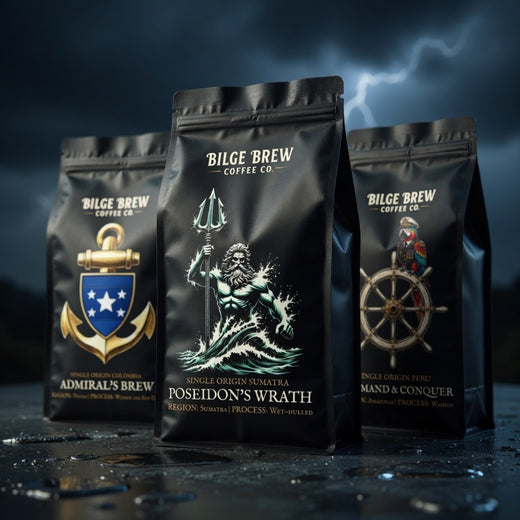
Roasted to Order Coffee: Why Freshness Changes Everything
Most coffee you buy — grocery store, big box, even some "premium" brands — was roasted weeks or months before it hit the shelf. By the time it reaches your cup, the flavor compounds that make good coffee worth drinking have already degraded.
Roasted to order means your coffee is roasted after you place the order. Not sitting in a warehouse. Not losing volatiles on a shelf. Roasted, packed, and shipped fresh.
Here's what that actually does to the cup — and why it matters more than most people realize.
What Happens to Coffee as It Goes Stale
Coffee is a perishable product. Most people treat it like a pantry staple that lasts indefinitely. It doesn't.
After roasting, coffee begins off-gassing CO2 — a natural process that actually helps protect the bean from oxidation in the first few days. But once that CO2 dissipates, oxygen starts doing damage. The aromatic compounds that create flavor begin breaking down. Oils oxidize. What was bright and complex becomes flat, papery, or stale.
Timeline for whole bean coffee stored in a sealed bag:
-
Days 1–5 post-roast: Too fresh for espresso (excess CO2 causes channeling), ideal for drip and pour over
-
Days 5–21: Peak window for most brew methods including espresso
-
Days 21–42: Still drinkable, flavor starts declining
-
Beyond 6 weeks: Noticeably stale — flat crema, muted flavor, papery finish
Grocery store coffee is typically roasted, packaged, shipped to a distribution center, shipped to a store, and sits on a shelf before you buy it. That process often takes 2–6 months. You're buying coffee that's already past its peak before you open the bag.
Full comparison: Roasted-to-Order vs Grocery Store Coffee.
What Roasted to Order Actually Means
The phrase gets used loosely. Here's what it means when it's real:
- Your order triggers the roast — beans aren't pre-roasted and warehoused
- Coffee ships within a short window after roasting — typically 1–3 days
- You receive coffee in its active peak window, not past it
What it doesn't mean: roasted in small batches necessarily, or roasted by the person who sold it to you. Roasted-to-order is about timing — fresh roast date relative to when you receive it. That's what affects the cup.
Bilge Brew uses a fulfillment partner for roasting and shipping. What that means for you: specialty grade beans, roasted after your order, shipped fast. The roast date is on the bag. You can check it.
What You Actually Taste When Coffee Is Fresh
This isn't abstract. The difference between fresh-roasted and stale coffee is noticeable — even to people who don't consider themselves coffee enthusiasts.
Fresh coffee:
- Aroma hits when you open the bag — distinct, strong, complex
- Crema on espresso is dense and lasting, not thin and disappearing
- Flavor has clarity — you can actually taste notes, not just "coffee"
- Finish is clean, not papery or flat
Stale coffee:
- Bag smells faint or generic when opened
- Espresso crema is thin, pale, or absent
- Flavor is one-dimensional — just bitter or just "brown"
- Finish is flat, sometimes cardboard-like
If you've ever wondered why your home coffee doesn't taste like a good café — freshness is usually a bigger factor than equipment.
Why Specialty Grade Matters on Top of Freshness
Freshness amplifies whatever's in the bean — good or bad. Stale commodity beans that become fresh don't suddenly become excellent. Fresh specialty grade beans, however, perform at a level that stale beans never can.
Specialty grade means the beans scored 80+ on a 100-point quality scale — evaluated for flavor, aroma, body, acidity, and defect count. Fewer defects means fewer off-notes in the cup. Better sourcing means more interesting, distinct flavor to begin with.
Fresh + specialty grade is the combination that makes the difference. One without the other is half the equation.
More on what the grading means: What Specialty Grade Coffee Actually Means.
How to Get the Most From Fresh Coffee Once It Arrives
Freshness only matters if you preserve it after the bag arrives.
-
Store whole bean, not ground. Ground coffee goes stale within days. Grind right before brewing.
-
Use an airtight container or the original bag with a one-way valve. Oxygen is the enemy. Keep it out.
-
Don't refrigerate. Temperature swings cause condensation inside the bag. Room temperature, away from heat and light.
-
For espresso, rest 5–7 days post-roast before pulling shots. Excess CO2 right off the roast causes channeling and uneven extraction.
-
Keep your grinder clean. Fresh beans run through a grinder coated in rancid oil from old beans defeats the purpose. How to clean a coffee grinder.
How long coffee actually stays fresh — full breakdown: How Long Does Coffee Stay Fresh.
Bilge Brew — Why We Built It This Way
Bilge Brew was started by a Navy veteran and registered nurse. The brand exists for people who show up — veterans, shift workers, fathers, nurses, firefighters — and need coffee that does the same. That means no shortcuts on sourcing, no stale inventory sitting in a warehouse, no compromises on what ends up in the bag.
Every roast is specialty grade. Every order is roasted fresh. That's the standard.
Read the founder story → | What veteran-owned actually means →
Where to Start
If you're not sure what to order, here's the short path:
Browse everything: All Roasts.
FAQs
What does "roasted to order" mean?
It means coffee is roasted after you place your order — not pre-roasted and warehoused. You receive beans in their active freshness window rather than weeks or months past peak.
How much does freshness actually affect taste?
Significantly. Freshness affects crema thickness on espresso, aroma intensity, flavor clarity, and finish. Stale coffee tastes flat, papery, and one-dimensional regardless of roast quality or brew method.
How long does roasted-to-order coffee stay fresh?
Whole bean in a sealed bag: 3–4 weeks at peak, still drinkable to 6 weeks. Ground coffee degrades much faster — days, not weeks. Grind fresh every time for best results.
Is roasted-to-order coffee worth the price difference vs grocery store?
For most people: yes. You're not paying more for marketing — you're paying for a product that's actually in its optimal state when it reaches you. The flavor difference is real and repeatable.
What's the best roasted-to-order coffee for espresso?
Anchor Espresso is the daily driver — purpose-built, wide extraction window, consistent. For a full comparison of espresso-suited roasts: Best Coffee Beans for Espresso.
Single origin or blend — which is fresher?
Freshness isn't about single origin vs blend — it's about roast date. Both are roasted to order at Bilge Brew. If you want to understand the flavor difference: Single Origin vs Blend.
Stay Sharp
New Roasts. Better Coffee. First in Your Inbox.
Exclusive discounts, new drops, early access, and coffee worth knowing about. No spam. No drama.
⚓ You're in. First to know, first to brew.
No drama. Unsubscribe any time.