Drive-Thru Coffee vs Brewing at Home: Cost, Taste, and Control (No Fluff)
Drive-thru coffee is fast. Home brewing is cheaper. The question isn't "which is better?"
The real question is: how many drive-thru cups are you buying out of habit — when you'd rather have better coffee for less money?
Here's the honest breakdown on cost, taste, and control.
1) Cost: The Math Is Not Close
Coffee shop prices vary, but the national numbers tell the story:
- Regular hot coffee: roughly $3–4 per cup
- Cold brew: often $5–6 per cup
- Lattes: $5–7 depending on size and city
Here's what that looks like in real life:
If you buy one coffee a day
- $3.50/day → ~$105/month
- $5.50/day → ~$165/month
That's not "treat yourself" money. That's a recurring bill.
Home brew cost (how to calculate yours)
Cost per cup = (bag price ÷ grams in bag) × grams you brew per cup
Typical example:
- 340g bag (12 oz), $16
- 20g per cup (a solid mug)
- That bag makes ~17 cups
- $16 ÷ 17 = $0.94 per cup
Even with a premium specialty bag at $20, you're usually under $1.50 per cup at home — while cafés run $3–7 depending on the drink. The gap doesn't close at any price point.
2) Taste: Drive-Thru Coffee Has a Consistency Problem
Drive-thru coffee is engineered for speed and volume, not peak flavor. A few things that work against it:
-
Pre-ground coffee: most drive-thru operations aren't grinding to order. Ground coffee goes stale fast — days, not weeks. By the time it hits your cup, the volatile aromatics that make coffee interesting are already gone.
-
Inconsistent extraction: high-volume machines are calibrated for throughput. Grind settings don't get adjusted shot to shot the way they would at a quality café.
-
Old beans: commercial chains use commodity-grade coffee sourced for cost and shelf stability, not peak flavor. That's not a knock — it's a business model.
Home brewing inverts all of this. You control the bean, the grind, the water temp, and the timing. A dialed-in home setup with fresh specialty coffee will consistently beat a drive-thru cup — and beat most café coffee too.
If your home coffee still tastes bitter or flat, the fix is usually one variable: Bitter Coffee Fix Guide.
3) Control: Build Your Cup on Purpose
Here's the simple framework — pick what you want and match the setup to it:
Want a bold milk drink (latte/cappuccino vibe)?
Use a roast that holds up in milk. A dark espresso roast with real body won't disappear when you add milk the way a medium roast will. Anchor Espresso is built for this.
Want balanced drip that doesn't need sugar?
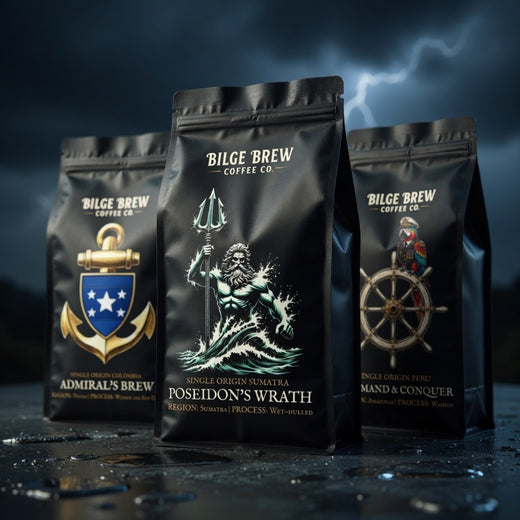
Go with a clean single origin — something with natural sweetness and low bitterness. Admiral's Brew — Colombia Single Origin is the easy choice here.
Want iced coffee without the $6 price tag?
Make cold brew once, batch it, drink it all week. How to brew cold brew at home.
Quick Comparison
| |
Drive-Thru |
Home Brew |
| Cost per cup |
$3–7 |
$0.75–1.50 |
| Speed |
Fast (with wait) |
5–10 min once practiced |
| Taste ceiling |
Capped by volume operations |
As high as you want to go |
| Consistency |
Variable |
Yours to control |
| Convenience |
High (no setup) |
Medium (routine once dialed) |
Drive-thru wins on speed and zero friction. Home brew wins on cost, taste ceiling, and the ability to improve. If you're buying drive-thru daily, switching to home brewing isn't a hobby — it's just taking control back.
The Best Middle Path (So You Don't Quit Cold Turkey)
You don't have to go extreme. Do this instead:
Step 1: Keep drive-thru for when you actually need it
Early mornings with no time, road trips, chaos days. Fine. Not every day needs to be optimized.
Step 2: Replace 3 days a week with one home method
Pick one and stick to it for two weeks before judging it:
Step 3: Upgrade the one thing that matters most — freshness
Pre-ground grocery store coffee is the fastest way to make home brewing disappointing. Fresh specialty beans roasted to order make a bigger difference than any equipment upgrade. Here's why.
And keep your grinder clean — old oil residue ruins even fresh beans: How to clean a coffee grinder.
FAQs
Is home coffee really cheaper?
Almost always. Even premium specialty coffee at home runs under $1.50 per cup — compared to $3–7 at a café. At one cup a day, that difference is $60–150 per month.
What's the easiest way to start brewing at home?
French press. Forgiving, cheap to start, and tastes good when you use the right ratio and fresh beans. Full guide: Best French Press Done Right.
What roast should I use for milk drinks at home?
A bold espresso roast that holds up through milk. Anchor Espresso is built for that — dark enough to stay present in a latte without tasting burnt.
Does home coffee actually taste better than drive-thru?
When you're using fresh specialty beans and a dialed-in recipe, yes — consistently. The limiting factor for drive-thru is volume operations: pre-ground coffee, commodity beans, machines calibrated for throughput. You don't have those constraints at home.
How do I stop my home coffee from tasting bitter?
Usually one of three things: grind too fine, water too hot, or dirty gear. Quick fix checklist: What Makes Coffee Taste Bitter.
Stay Sharp
New Roasts. Better Coffee. First in Your Inbox.
Exclusive discounts, new drops, early access, and coffee worth knowing about. No spam. No drama.
⚓ You're in. First to know, first to brew.
No drama. Unsubscribe any time.