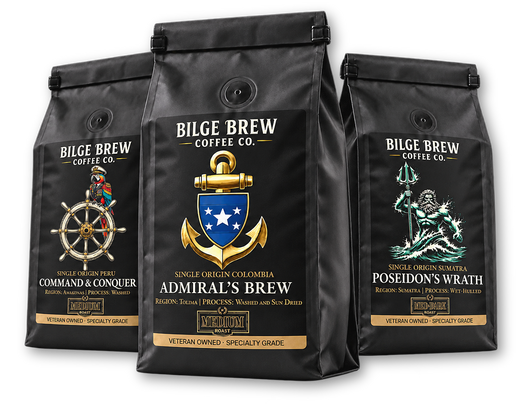
Tired of your coffee tastes bad experience? If your coffee tastes weak, stale, burnt, or even sour, you're not alone. The solution: a few adjustments can transform your morning brew from blah to brilliant. Start with a better grind size, check your water-to-coffee ratio, and make sure you're brewing at the right time and temperature. Choose robust beans like those from Bilge Brew's Anchor Espresso, Bilgewater, or Sea Witch collections for that stronger punch.
Most Likely Causes
Weak coffee can be frustrating, and several culprits are often to blame. The main offenders include:
-
Subpar Coffee Beans: Quality counts. Go for premium beans.
-
Wrong Grind Size: Too coarse a grind can lead to weak coffee.
-
Incorrect Water-to-Coffee Ratio: Diluted coffee makes for a watery brew.
-
Poor Brewing Technique: Over-extraction or under-extraction can both lead to loss of flavor.
-
Stale Coffee: Coffee that's sat too long loses its vigor.
Plain-English Explanation
When coffee tastes bad, digging into the details can help. Using low-quality or stale beans leads to a flat, uninspired brew. If your grind is too coarse, water can pass through too quickly, failing to extract the coffee's full flavor, hence the weak coffee. Too much water relative to coffee grounds dilutes the strength, leaving you with a thin cup. Conversely, incorrect brewing time or temperature can either release too little flavor or burn the coffee, resulting in bitterness.
Practical Fixes
-
Upgrade Your Beans: Switch to freshly roasted beans like Anchor Espresso for a robust flavor profile.
-
Adjust the Grind: Want stronger coffee? Thinner grinds increase surface area, making extraction more efficient and boosting intensity.
-
Calibrate Water Ratio: Aim for 1:15 coffee-to-water ratio as a starting point. Tweak from there according to taste.
-
Perfect the Brew Time: Aim for 4-5 minutes brewing if you're using a French press. Timing is essential.
-
Get the Temp Right: Ideal brewing temp is between 195°F to 205°F.
Best Bilge Brew Product Fit
For weak coffee issues, the Anchor Espresso is your best bet. Its bold profile keeps watery brews at bay, giving a strong jolt to your mornings. Pair with our Medium Roasts Collection for versatile options.
Feeling overwhelmed navigating your coffee options? Dive into Bilge Brew's all roasts for diverse flavors and robust offerings to transform your daily grind.
FAQ Section
Q: My coffee tastes burnt. How can I fix this?
A: Use a finer grind and ensure brewing within the right temperature range (195°F - 205°F). Also, check your bilge water quality.
Q: The coffee from my local shop tastes sweeter. What am I missing?
A: Try different beans. Maritime Roast can provide a sweeter, less bitter experience due to its origin and roasting methods.
Q: Sourness in coffee drives me nuts. What gives?
A: Sour coffee often comes from under-extraction. Try slowing down your brew time or adjust to a finer grind size. General Quarters may serve as an excellent starting point for a less acidic profile.
Ready to fix your weak coffee woes and tackle the bitter coffee dilemma? Explore Bilge Brew's collections today and say goodbye to uninspired cups. Visit Bilge Brew Coffee Co. for quality roasts that refuse to compromise on taste and punch.
FAQs
How can I tell if my coffee is too weak?
If your coffee lacks strong flavor or has a watery consistency, it may be weak. You should also consider whether it's failing to produce a rich aroma and whether the color appears overly light when brewed.
What causes weak coffee?
Weak coffee can result from various factors, including using too few coffee grounds, brewing with water that's too cold, or a brew time that's too short. Additionally, stale coffee beans can also lead to a lack of robust flavor.
What is the ideal coffee-to-water ratio for brewing?
A general guideline for a balanced brew is to use one to two tablespoons of coffee per six ounces of water. Adjusting this ratio according to your taste preference and the coffee type can help create a stronger cup.
Can I strengthen my coffee after brewing?
While it's difficult to enhance flavor greatly after brewing, you can add espresso or a stronger blend to your weak coffee. Adding milk or cream can also enhance the overall taste experience.
Is using a different brewing method a good solution?
Yes, trying a different brewing method can produce varying strengths and flavors. For example, switching from a drip coffee maker to a French press or pour-over technique often results in a richer cup.
How do I ensure I’m using fresh coffee grounds?
To keep your coffee fresh, store it in an airtight container in a cool, dark place and avoid buying more than you can consume in a few weeks. Grinding your coffee just before brewing also helps preserve flavor.
What types of coffee beans are best for a stronger brew?
Generally, darker roast beans tend to produce a bolder flavor. Look for varieties known for their strong characteristics, such as espresso or dark roasts, to enhance the richness of your coffee.
Can the brewing temperature affect the strength of my coffee?
Absolutely! Brewing coffee at the optimal temperature between 195°F to 205°F can extract more flavor compounds, resulting in a richer and stronger brew. Water that's too cold can lead to weak coffee.
Is it possible to fix weak coffee while still enjoying my current beans?
Yes, you can improve the strength of your coffee by adjusting your brewing method, using a higher coffee-to-water ratio, or increasing the brew time without changing your beans. Consider experimenting with different strengths until you find your perfect cup.
Fresh-roasted coffee
Ready for a better cup?
Explore Bilge Brew coffees roasted after order and built for people who care what lands in the cup.
Shop coffee
Veteran-owned. Family roasted. Fresh after order.
Bilge Brew Coffee is built for people who want coffee with flavor, not stale shelf stock.