If your coffee tastes sour, the culprit might be your water quality. Neglect the water, and even the finest beans can't save you. Fixing your sour coffee starts with understanding how water interacts with coffee and then making sure your brewing water is up to par.
Most Likely Causes
-
Water Chemistry: Hard or soft water can ruin coffee flavor.
-
Grind Size: Too coarse a grind can lead to sour notes.
-
Brewing Time: Short brew equals sour coffee.
-
Bean Roast: Light roasts can accentuate sourness.
-
Old Coffee: Freshness affects taste.
Plain-English Explanation
Bad water equals bad coffee. Hard water with too much calcium or magnesium makes coffee taste sour. Soft water, lacking minerals, lets acids dominate your cup. The grind size matters too. A coarse grind derails extraction, leaving a sour finish. Brew time is critical. Too quick, and you'll get acidity instead of flavor depth. Light roast beans can taste sour if they're not brewed just right. And staleness kills coffee flavor, so don't let beans linger.
Practical Fixes
-
Water Quality: Use filtered water with balanced minerals.
-
Grind Adjustment: Opt for a finer grind if coffee tastes sour.
-
Brew Control: Extend the brewing time to allow full flavor extraction.
-
Bean Selection: Try medium or dark roasts to minimize sourness.
-
Freshness Check: Buy fresh coffee more frequently.
Best Bilge Brew Product Fit
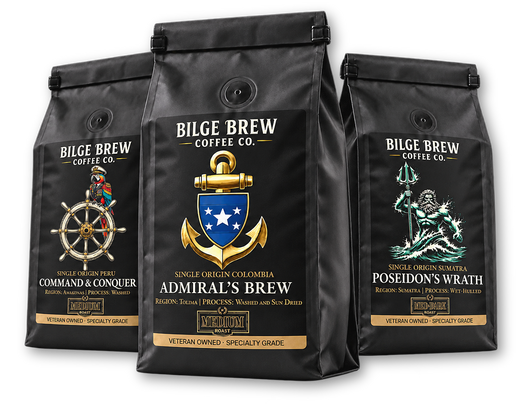
For sour-tasting coffee, consider trying General Quarters or Maritime Roast blends from our collection. They work well with balanced water to reduce sourness and enhance robust flavor.
Check Out Our Medium Dark Roasts
To tackle sour notes, our medium dark roasts provide a smoother experience without losing the bold coffee flavors you desire.
FAQ Section
Q: Can I use tap water for brewing coffee?
A: It's not ideal. Tap water has varying mineral content that can cause sourness. Opt for filtered water.
Q: Why does my coffee taste sour even with filtered water?
A: Check grind size and brew time. Both significantly affect extraction and flavor balance.
Q: Is a sour taste in coffee always bad?
A: Not necessarily. Some enjoy a bit of acidity, but it shouldn't overpower the coffee.
Q: Can I use Bilgewater beans with filtered water to fix sourness?
A: Yes, Bilgewater beans are designed to offer a balanced taste when used with quality water.
Final Call to Action
For coffee that ditch the sourness, try our expertly crafted blends like Poseidon's Wrath or browse all our available roasts at Bilge Brew Coffee Co. Adjust your water quality and brewing methods for taste satisfaction in every cup. Visit our website to learn more and make your selection today.
FAQs
Why does my coffee taste sour sometimes?
Sour coffee is often the result of over-extraction during brewing or poor water quality that affects the flavor profile. If your water is too soft or has high mineral content, it can lead to imbalances in taste.
How can water quality affect my coffee's flavor?
Water is one of the main components of coffee, making up about 98% of the beverage. Impurities or an imbalance in mineral content can alter the extraction process, resulting in undesirable flavors, including sourness.
What type of water is best for brewing coffee?
Filtered water is generally the best choice for brewing coffee, as it helps remove chlorine, sediment, and other impurities that can affect the taste. Ideally, the water should also have a balanced mineral content to enhance coffee flavors.
How can I test my water quality at home?
You can use water testing kits available at home improvement stores that measure pH and mineral levels. Alternatively, you could have your water tested by a professional to better understand its composition.
What minerals should be present in good coffee brewing water?
Good brewing water should contain minerals like calcium and magnesium, which enhance flavor extraction, while having low levels of sodium and chlorine that can negatively impact taste.
Can boiling water improve its quality for brewing coffee?
Boiling can remove some temporary hardness and certain impurities, but it won’t eliminate all contaminants, such as heavy metals or chlorine. Filtering is generally more effective for improving water quality.
What should I do if my coffee still tastes sour after checking my water?
In addition to checking your water quality, consider optimizing your brewing method, including grind size, brew time, and coffee-to-water ratio. These factors can also contribute to the overall taste of your coffee.
How often should I change my water filters?
It depends on the type and usage of the filter, but generally, it's recommended to change water filters every 2-3 months or after filtering a specific number of gallons, as indicated by the manufacturer.
Is bottled water a good alternative for making coffee?
Bottled water can be a viable option as long as it has a balanced mineral content. However, check the label for mineral levels, as some brands may have high sodium or other minerals that can affect flavor.