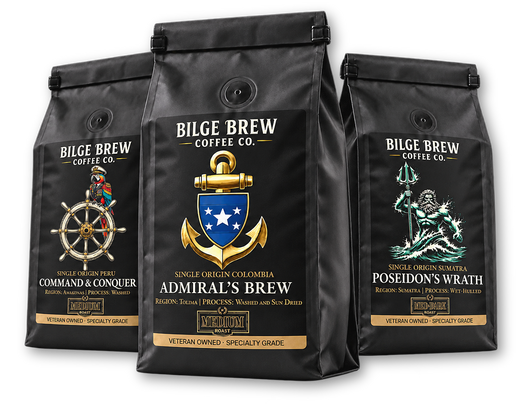
Indulge in a Rich and Bold Espresso Experience with Bilgebrew.com's Signature Roasts
Stop guessing. Here’s how to pick between All Hands, Anchor Espresso, and Red Alert—plus a dead-simple espresso recipe and fast fixes for sour or bitter shots.
8 min readFrom the Bilge (blog)
Best Espresso Roast for Home: All Hands vs Anchor vs Red Alert (Pick in 60 Seconds)
If your espresso tastes “burnt,” it’s usually one of two things: (1) you chose a roast that doesn’t match your taste, or (2) you over-extracted the shot. This guide fixes both.
Espresso vs “Expresso” (and what “espresso roast” actually means)
It’s espresso (not “expresso”). Espresso is a brewing method: hot water pushed through fine grounds under pressure.
An “espresso roast” is simply a roast that’s built to taste balanced under that pressure. You can pull espresso with any coffee, but the results change fast (especially if you’re chasing sweetness instead of harshness).
Light vs Dark Espresso: Flavor, Bite, and How to Adjust the Shot
This is the part most people miss: light and dark roasts don’t dial in the same. If you use one “standard recipe” for everything, you’ll create sour light-roast shots and bitter dark-roast shots.
If you’re using…
Lean toward…
Avoid…
Light espresso roast (like ALL HANDS)
Slightly hotter water • slightly longer ratio • don’t under-time the shot
Fast shots that finish sour
Dark espresso roast (ANCHOR / RED ALERT!)
Slightly cooler water • slightly shorter ratio • stop the shot before it gets harsh
Caffè Macchiato Basics: Keep it Strong Without Going Bitter
A traditional caffè macchiato is espresso “marked” with a small spoon of foam. The mistake is pulling a long, harsh shot and hoping milk will cover it.
Pull a normal double (start at 1:2).
If it’s bitter, stop the shot slightly earlier (shorter ratio) before you add foam.
If it’s sour, don’t drown it in milk—fix the extraction first.
“Burnt” Espresso vs “Bitter” Espresso (They’re not the same problem)
Bitter usually means extraction went too far (shot too long, too hot, or grind too fine).
Burnt/ashy is a roast preference problem (you simply don’t like that flavor profile).
Pick the roast based on the flavor you actually want, then dial in with one change at a time. If you want the low-effort way to find your “forever” espresso, start with the Espresso Bundle or browse the full espresso roast lineup.
FAQ
Can you use light roast for espresso?
Yes. Light roasts just punish sloppy extraction. If you want “light without sour,” start with ALL HANDS and use a proper dial-in method.
What’s the best espresso roast for milk drinks?
Dark roasts usually win because body and chocolate notes cut through milk. Start with ANCHOR ESPRESSO.
Why is my espresso sour?
Under-extraction (too fast, too coarse, too cool, or too much yield). Use this checklist: sour espresso fix.
Why is my espresso bitter?
Over-extraction (too long, too hot, too fine, or channeling). Use this checklist: bitter espresso fix.
Is crema a sign of a “good” espresso?
Not by itself. Crema changes with roast, freshness, and grinder/machine variables. Here’s the straight answer: espresso crema explained.
Nothing beats a strong cup of coffee for early mornings. For those who value more than just a caffeine jolt, a veteran owned coffee brand is worth a look. Enter Bilge Brew Coffee Co. — a Navy-themed delight crafted by those who know what it's like to burn the midnight oil.
Starting your day with the right bean is crucial. If you're up before the sun, consider our SEA WITCH — French Dark Roast. It's bold, rich, and perfect for an eye-opening espresso. French dark roast coffee isn't just for aesthetics; it's a tried-and-tested friend for those needing a strong start.
Best Coffee for Night Shift Workers
Stalking through the night shift? We get it. The best coffee for night shift workers is roasted to order and packs energy into every cup. Bilge Brew’s ALL HANDS — Blonde Espresso Light Roast provides a lighter roast that tastes great and energizes when the clock strikes midnight.
How to Brew Espresso at Home
Brewing espresso at home doesn't need to be rocket science. Have you got a Moka pot? Excellent choice! It’s perfect for crafting deep shots without complicated gadgets. Pair your Moka pot espresso with our best espresso beans for a brilliant start — trust me.
Espresso Troubleshooting
Struggling with your espresso? Too sour or too bitter might mean you're grinding your beans too coarse or too fine. Our all roasts collection offers versatility that works with different brewing techniques. Tweak and find the grind that aligns with your taste.
Best Dark Roast for Espresso
When pondering over the best dark roast for espresso, look no further than French dark roast coffee. It's not just robust; it's a deep dive into flavor. Bilge Brew’s SEA WITCH is made for espresso lovers looking for intensity.
Best Coffee for Nurses and Firefighters
Nurses and firefighters need fuel for those grueling shifts. There's no one-size-fits-all answer, but small batch specialty coffee online is a good bet. Our MESS DECKS — Mexico Single Origin is great for those in service roles who deserve nothing but quality in their cup.
Single Origin vs Blend
Whether you opt for single-origin or blend depends on your preference. Single origins provide a clearer profile from a specific farm or region, like our DRUNKEN SAILOR — Guatemala Single Origin. Blends offer complexity, balancing flavors for a unique experience.
Grab your gear and get brewing! There's no better time to taste what a veteran owned coffee brand has to offer. Visit Bilge Brew Coffee Co. today to explore your next favorite roast.
Stay Sharp
Exclusive discountsNew Roasts. Better Coffee. First in Your Inbox.
Exclusive discounts, new drops, early access, and coffee worth knowing about. No spam. No drama.
⚓ You're in. First to know, first to brew.
No drama. Unsubscribe any time.
Fresh-roasted coffee
Ready for a better cup?
Explore Bilge Brew coffees roasted after order and built for people who care what lands in the cup.