Crema Explained: What It Means (and What It Doesn’t)
The reddish-brown foam that crowns a well-pulled espresso shot has captivated coffee enthusiasts for decades. Often lauded as the hallmark of a superior brew, this ephemeral layer possesses a rich mystique. Yet, the reality of crema is far more nuanced, and frequently misunderstood, than its visual appeal might suggest. To truly appreciate espresso, one must delve beyond the surface and understand what crema is, what it signifies, and more importantly, what it doesn't.
The Alchemy of Espresso: What Crema Is
At its core, crema is a complex emulsion born from the high-pressure interaction of finely ground coffee, hot water, and the natural oils and gases within the coffee bean. When water, heated to near boiling and forced through a densely packed puck of coffee at approximately nine bars of pressure, encounters the coffee grounds, a rapid chemical reaction ensues. This process liberates volatile organic compounds, including carbon dioxide, which were trapped within the bean during the roasting process.
The Building Blocks of Crema
Crema is not a uniform entity but rather a composite structure. It is primarily composed of several key elements:
Dissolved Solids and Oils
The hot water acts as a solvent, extracting soluble compounds from the coffee grounds. These include sugars, acids, and lipids (oils). These dissolved solids and oils are crucial for building the structure of crema.
Trapped Gases
The most significant contributor to crema's volume is the carbon dioxide released from the coffee beans during the brewing process. This gas, a byproduct of the coffee bean's respiration and fermentation, gets emulsified into the water and coffee solids.
Proteins
Proteins within the coffee grounds also play a vital role. As they are denatured by the heat and pressure, they contribute to the stability of the emulsion, acting as a sort of scaffolding that traps the gas bubbles and suspended solids.
The resulting mixture is a colloidal suspension, a stable mixture where small particles are dispersed evenly throughout a liquid. The distinct color of crema, ranging from a light tan to a rich reddish-brown, is due to the presence of melanoidins, complex compounds formed during the Maillard reaction and caramelization of sugars during the roasting process.
Beyond the Surface: Why Crema Alone Isn't Quality
The ubiquitous presence of crema on an espresso shot can be misleading. While it often accompanies great espresso, its appearance alone is not a definitive indicator of taste or quality. Imagine a beautifully polished apple that, upon biting, is mealy and bland. The crema can be the polished exterior, impressive to behold but not necessarily reflective of the underlying flavor.
The Illusion of Perfection
Much of the mystique surrounding crema stems from its visual appeal. A thick, persistent crema suggests skill and a well-executed extraction. However, numerous factors can contribute to a visually appealing crema without translating into a superior tasting beverage. This is where the coffee drinker must look beyond the superficial and consider the more profound aspects of the espresso experience.
The Ephemeral Nature of Flavor
The true measure of an espresso lies in its taste, its balance of acidity, sweetness, and bitterness, and the complexity of its aroma. These sensory attributes, while influenced by the extraction process that creates crema, are distinct and should be evaluated independently. Just as a symphony’s beauty is not solely in the conductor’s flourish but in the harmony of the instruments, the quality of espresso is in the symphony of its flavors.
Factors That Influence Crema (and Can Still Taste Bad)
Several variables in the espresso-making process can dramatically affect the quantity and appearance of crema. However, focusing solely on maximizing these factors without considering the resulting taste can lead to a visually satisfying but ultimately disappointing cup. For more information on crema and its significance in espresso, visit MHW 3Bomber Coffee Academy.
Brewing coffee is an art, but it's also a science. Find out why your brew routine might be hurting your cup's taste and quality.
Pressurized Baskets and “Fake” Crema Lookalikes
| Product |
Pressurized Baskets |
Fake Crema Lookalikes |
| Price |
15.99 |
12.50 |
| Material |
Stainless Steel |
Plastic |
| Crema Quality |
Low |
Artificial |
| Compatibility |
Universal |
Specific Brands |
In the pursuit of replicating the visual appeal of espresso, some coffee equipment manufacturers have introduced innovations that can generate substantial crema without necessarily achieving the nuanced flavors of traditional espresso. Pressurized portafilter baskets are one such example.
The Mechanics of Pressurized Baskets
Standard espresso baskets are designed with a single outlet. Pressurized baskets, on the other hand, have a smaller, confined outlet. This design creates artificial backpressure within the basket, forcing water through the coffee grounds at a higher velocity and with greater emulsification power. This significantly boosts crema production, often resulting in a thick, stable layer that can be aesthetically impressive.
The Deception of Appearance
However, this artificially generated crema often lacks the complexity and delicate aroma of crema produced through proper technique and equipment. The taste profile associated with pressurized baskets can be muted, a shadow of the dynamic flavors found in well-extracted espresso. It's akin to a plastic flower, beautiful to look at but lacking the scent and texture of a real bloom. While they can produce a passable espresso for home users seeking convenience, they fundamentally alter the extraction dynamics and thus the final flavor profile.
Other Imposters
Beyond pressurized baskets, other factors can contribute to a misleading crema. Using stale coffee, for instance, can still yield some crema due to residual gases, but the taste will be decidedly inferior. Similarly, some pre-ground coffees, particularly those marketed for espresso, may contain additives designed to enhance crema, further masking the true quality of the coffee.
Better Indicators: Taste, Balance, Repeatability
Ultimately, the most reliable indicators of quality espresso are its sensory attributes: taste, balance, and the ability to replicate a good shot consistently. While crema can be a visual cue, it should never be the sole determinant of an espresso's merit.
The Symphony of Flavor
When evaluating an espresso, pay close attention to the taste. Does it have a pleasant sweetness? Is there a lively acidity that brightens the palate, rather than an aggressive sourness? Is the bitterness present in a way that is complementary and adds depth, or is it sharp and unpleasant? The aroma, too, is a crucial component, offering clues to the coffee's origin, roast, and freshness. A great espresso should be a multi-sensory experience, with taste and aroma working in harmony. This is the true melody of the coffee.
The Harmony of Components
Balance is key. An exceptional espresso will exhibit a harmonious interplay between its different flavor components. No single element should dominate to the detriment of others. The sweetness should balance the acidity, and both should be supported by a pleasant, lingering bitterness. This equilibrium is the hallmark of a expertly crafted shot.
The Significance of Repeatability
The ability to consistently produce a delicious espresso is perhaps the most telling sign of true quality. If a barista or home brewer can repeatedly pull shots that exhibit excellent taste, aroma, and balance, it indicates a deep understanding of the process and a mastery of the equipment. It signifies that the system, from the grind to the extraction, is working in concert, not by chance but by design. This consistency is the conductor’s reliable rhythm.
In conclusion, while crema remains an enchanting aspect of the espresso ritual, it is essential to approach it with a discerning eye. The opulent foam can be a reward for skillful brewing, but it can also be a deceptive facade. By focusing on the intrinsic qualities of taste, balance, and the enduring virtue of repeatability, one can navigate the world of espresso with clarity and truly uncover the essence of a superior cup.
FAQs
What is crema in plain terms?
Crema is the golden-brown foam that sits on top of a freshly brewed espresso. It is created when hot water is forced through finely ground coffee beans, causing oils and gases to emulsify and rise to the surface.
Why isn't crema alone a sign of quality?
While crema can be an indicator of a well-prepared espresso, it is not the sole measure of quality. Crema can be manipulated or enhanced artificially, and its presence does not guarantee a good tasting espresso.
What factors can increase crema but still result in a bad taste?
Factors such as using stale coffee beans, improper grind size, or inconsistent tamping pressure can lead to an increase in crema without improving the overall taste of the espresso. These factors can result in a bitter or sour flavor.
What are pressurized baskets and "fake" crema lookalikes?
Pressurized baskets are designed to create artificial crema by using a built-in pressure release valve. This can give the appearance of crema without the proper extraction process. "Fake" crema lookalikes can also be created using additives or enhancers.
What are better indicators of espresso quality than crema?
Taste, balance, and repeatability are better indicators of espresso quality than crema alone. A well-prepared espresso should have a harmonious flavor profile, with the ability to consistently produce the same results with each extraction.
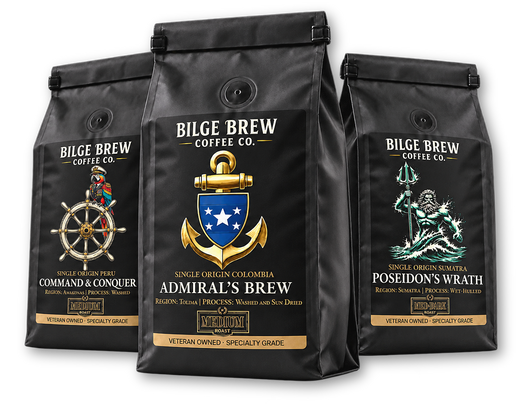
Nothing beats a strong cup of coffee for early mornings. For those who value more than just a caffeine jolt, a veteran owned coffee brand is worth a look. Enter Bilge Brew Coffee Co. — a Navy-themed delight crafted by those who know what it's like to burn the midnight oil.
Table of Contents
Best Coffee for Early Mornings
Starting your day with the right bean is crucial. If you're up before the sun, consider our SEA WITCH — French Dark Roast. It's bold, rich, and perfect for an eye-opening espresso. French dark roast coffee isn't just for aesthetics; it's a tried-and-tested friend for those needing a strong start.
Best Coffee for Night Shift Workers
Stalking through the night shift? We get it. The best coffee for night shift workers is roasted to order and packs energy into every cup. Bilge Brew’s ALL HANDS — Blonde Espresso Light Roast provides a lighter roast that tastes great and energizes when the clock strikes midnight.
How to Brew Espresso at Home
Brewing espresso at home doesn't need to be rocket science. Have you got a Moka pot? Excellent choice! It’s perfect for crafting deep shots without complicated gadgets. Pair your Moka pot espresso with our best espresso beans for a brilliant start — trust me.
Espresso Troubleshooting
Struggling with your espresso? Too sour or too bitter might mean you're grinding your beans too coarse or too fine. Our all roasts collection offers versatility that works with different brewing techniques. Tweak and find the grind that aligns with your taste.
Best Dark Roast for Espresso
When pondering over the best dark roast for espresso, look no further than French dark roast coffee. It's not just robust; it's a deep dive into flavor. Bilge Brew’s SEA WITCH is made for espresso lovers looking for intensity.
Best Coffee for Nurses and Firefighters
Nurses and firefighters need fuel for those grueling shifts. There's no one-size-fits-all answer, but small batch specialty coffee online is a good bet. Our MESS DECKS — Mexico Single Origin is great for those in service roles who deserve nothing but quality in their cup.
Single Origin vs Blend
Whether you opt for single-origin or blend depends on your preference. Single origins provide a clearer profile from a specific farm or region, like our DRUNKEN SAILOR — Guatemala Single Origin. Blends offer complexity, balancing flavors for a unique experience.
Feeling inspired to try something bold? Check our Single-Serve Cups (K-Cup® Compatible) for convenience and quality in every cup.
Grab your gear and get brewing! There's no better time to taste what a veteran owned coffee brand has to offer. Visit Bilge Brew Coffee Co. today to explore your next favorite roast.
Stay Sharp
Exclusive discountsNew Roasts. Better Coffee. First in Your Inbox.
Exclusive discounts, new drops, early access, and coffee worth knowing about. No spam. No drama.
⚓ You're in. First to know, first to brew.
No drama. Unsubscribe any time.