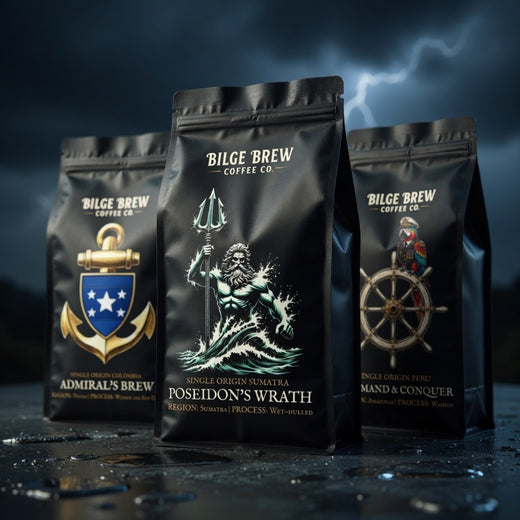
Best Dark Roast Coffee for Espresso at Home
Dark roast and espresso go together — but not every dark roast is built for it. Get the wrong one and you're fighting bitterness, flat crema, and a shot that tastes like burnt rubber no matter how well you dial it in.
Here's what actually matters when picking a dark roast for espresso, which roast profiles work, and where each Bilge Brew option fits.
Why Roast Profile Matters for Espresso
Espresso is a concentrated brew. Water forces through the puck fast and under pressure, which means every flaw in the bean gets amplified. A dark roast that tastes fine as drip coffee can taste harsh, ashy, or hollow as espresso if the roast went too far.
What you want in a dark roast for espresso:
-
Developed without being scorched — roast depth that reads as chocolate, caramel, or molasses, not burnt wood or ash
-
Enough body to hold up under pressure and produce dense, lasting crema
-
Low defects — specialty grade sourcing means fewer bitter, sour, or fermented surprises in the cup
-
Fresh roast date — dark roasts go stale faster than lighter roasts because the cell structure is more porous. Roasted-to-order matters more at this end of the spectrum.
Dark Roast vs French Roast — What's the Difference?
These terms get used interchangeably but they're not the same.
-
Dark roast: developed to bring out body and reduce acidity, while still preserving some bean character. Well-made dark roasts have chocolate, caramel, and mild roast notes.
-
French roast: pushed further — into second crack and beyond. More oil on the surface, more roast-forward flavor, less origin character. Bold and heavy. Not for everyone as espresso, but it has its place.
For espresso, most people find a well-developed dark roast pulls cleaner than a French roast. French roast works well as a strong drip or French press coffee where the intensity is what you want.
Bilge Brew Dark Roast Options — Which One Fits Your Setup
Anchor Espresso — The Primary Espresso Pick
Built specifically for espresso. Dark roast, consistent body, wide extraction window — meaning it's forgiving to dial in and pulls clean across a range of grind settings. If you're pulling shots daily and want something that works without fighting it, start here.
Anchor Espresso →
Sea Witch — French Dark Roast
A French dark roast Arabica/Robusta blend. Pushed further than Anchor — more roast-forward, heavier body, bolder in the cup. Works well as espresso for people who want maximum intensity, or as a strong drip and French press coffee.
Sea Witch French Dark Roast →
General Quarters — Dark for Drip
Medium-dark blend built for drip and batch brewing. Holds up through refills without turning harsh. Not the primary espresso pick, but pulls a solid shot if you want something between medium and dark roast character.
General Quarters →
Not sure which roast fits your setup? Use the Coffee Finder or browse the full Espresso Roasts collection.
What Is Specialty Grade Coffee?
Specialty grade is the top tier of coffee quality — scored 80+ points on a 100-point scale by certified Q-graders evaluating aroma, flavor, aftertaste, acidity, body, and defect count. It's roughly the top 3% of coffee produced worldwide.
Why it matters for espresso specifically: specialty grade beans have fewer defects. Defects in the cup show up as unexpected bitterness, sourness, or off-flavors — and espresso concentrates all of that. Lower-grade commodity coffee is fine for drip where dilution masks the rough edges. For espresso, you want clean beans.
All Bilge Brew coffees are specialty grade. Full breakdown: What Specialty Grade Coffee Actually Means.
Single Origin vs Blend for Dark Roast Espresso
Both work. Here's when each makes sense:
-
Blend: designed for consistency. Multiple origins are combined to balance flavor across roast levels. Anchor Espresso is a blend — predictable, reliable, works well as your daily shot.
-
Single origin: one farm, one region, distinct character. Can be excellent as espresso, but more sensitive to extraction. A well-pulled single origin espresso is interesting; a poorly pulled one is sour or harsh. Higher ceiling, less forgiving.
For beginners or daily drivers, start with a blend. When you're dialed in and want to explore: Single Origin vs Blend — full breakdown.
Quick Espresso Troubleshooting for Dark Roasts
Dark roasts are more extraction-sensitive than lighter coffees. Common issues and fast fixes:
-
Shot tastes bitter or harsh: grind coarser, shorten yield, or drop brew temperature slightly. Dark roasts over-extract faster than medium roasts.
-
Shot runs too fast and tastes thin: grind finer. But also check your grinder — packed fines and oil buildup are the hidden variable most people miss. Clean your grinder first before chasing a recipe problem that isn't there.
-
Crema is thin or disappears fast: usually a freshness issue. Check your roast date. Dark roast beans go stale quickly — ideally within 2–4 weeks of roast date.
Full troubleshooting: Why your espresso tastes bitter and how to fix it and how to dial in dose, yield, and time.
Veteran-Owned. Built for People Who Work.
Bilge Brew was started by a Navy veteran and registered nurse — someone who knows what a 12-hour shift feels like and why the first cup of the morning matters. The brand exists for veterans, shift workers, fathers, and anyone who shows up when it counts and wants coffee that does the same.
No shortcuts on sourcing. No stale beans sitting in a warehouse. Roasted to order, shipped fresh.
Read the founder story → | What veteran-owned actually means →
FAQs
What's the best dark roast for espresso?
For a purpose-built espresso dark roast: Anchor Espresso. For maximum intensity and a French roast profile: Sea Witch. Both are specialty grade and roasted to order.
Is French roast good for espresso?
It can be, but it's more unforgiving. French roast is pushed further in the roaster, which leaves less margin for extraction error. If you like intense, heavy-bodied shots and are comfortable dialing in your machine, try it. If you're still dialing in, start with a standard dark roast first.
Does dark roast have more caffeine?
Not meaningfully. Caffeine difference between roast levels is small. Your dose and brew ratio drive caffeine far more than roast color. Full breakdown: Espresso vs drip caffeine — the real answer.
What grind size for dark roast espresso?
Start slightly coarser than you would with a medium roast — dark roasts are more porous and extract faster. Aim for 25–30 seconds at a 1:2 ratio and adjust from there. If the shot is bitter, go coarser first.
Where can I buy specialty grade espresso online?
Browse the full Espresso Roasts collection or start with the Espresso Bundle to compare roast profiles side by side.
Stay Sharp
New Roasts. Better Coffee. First in Your Inbox.
Exclusive discounts, new drops, early access, and coffee worth knowing about. No spam. No drama.
⚓ You're in. First to know, first to brew.
No drama. Unsubscribe any time.