Your coffee tastes burnt? It’s likely the brew temperature. When coffee tastes bad, especially burnt, strong coffee can be ruined by brewing too hot. Lowering the water temperature fixes bitter coffee and improves taste immediately.
Most Likely Causes
Coffee that tastes burnt is usually a sign of high brewing temperature. Water that’s too hot extracts compounds too quickly, leading to bitter coffee. Consistently using freshly roasted beans and proper storage controls flavor, but brewing errors ruin any coffee. Weak coffee and stale notes can also result from improper heat.
Plain-English Explanation
Brewing coffee aligns with chemistry. Water over 205°F (96°C) scorches grounds, resulting in harsh flavors. Aim for 195°F to 205°F (90°C to 96°C) for balanced extraction. Above 205°F, even the best beans falter from heat damage. When coffee tastes sour, water temperature might be too low or too high; adjust grind size for balance. Bitter flavors signal over-extraction, often from higher temperatures but also incorrect coffee-to-water ratios.
Practical Fixes
-
Adjust Your Kettle: Use a thermometer to ensure water stays below 205°F.
-
Automatic Machines: Some machines brew too hot. Set water controls to 195°F if possible.
-
Cool Down: Let the boiled water sit for 30 seconds before brewing.
-
Grind Consistency: Coarse grounds can hinder extraction, causing burnt flavors. Adjust fineness.
-
Less Water, More Coffee: If taste is still off, increase coffee and decrease water slightly.
Best Bilge Brew Product Fit
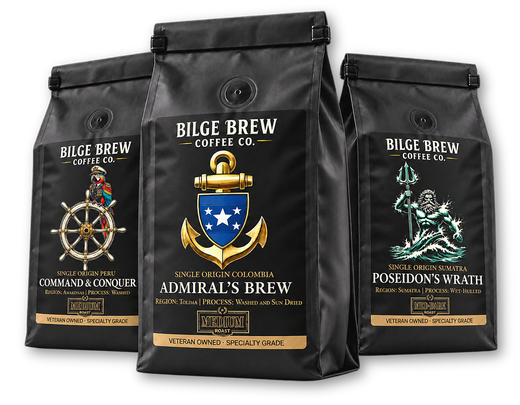
Choosing the right blend matters as much as brewing temperature. If coffee tastes burnt or bitter, consider Maritime Roast or Bilgewater, known for handling minor brewing errors with grace. These blends optimize flavor with balanced acidity and rich notes, fitting for bitter coffee fixes.
Explore our full selection at Bilge Brew Coffee Co.
Coffee quality problems occur, but straightforward tweaks ensure taste satisfaction. Next time, temperatures staying in check deliver rewarding smoothness, keeping those burnt notes at bay.
Mid-Article Note
Partner great brewing techniques with quality beans. A consistent taste experience demands reliable products and methods harmonizing seamlessly.
FAQ Section
Why does my coffee taste burnt?
High water temps typically lead to burnt flavors. Set temperatures between 195°F and 205°F for ideal results.
What’s the ideal coffee-to-water ratio?
1:16 is common. Modify to 1:15 for stronger coffee or 1:18 if too strong.
Can grind size affect taste?
Yes. Coarse grinds require longer brewing. Too fast equals weak results; too slow, bitterness. Adjust accordingly.
Does roast level matter?
Yes. Light roasts prefer cooler temp; dark handle heat better.
Is it possible my machine brews too hot?
Definitely. Use a thermometer to verify your machine’s temp isn’t above optimal.
Final Note
Don’t compromise when coffee tastes bad. Brew temperature and right beans translate to satisfaction. Choose Maritime Roast for surefire success; no one should endure burnt coffee.
Savor exceptional flavors with Bilge Brew. Perfect every pour and delight in morning simplicity.
FAQs
Why does my coffee taste burnt?
Coffee can taste burnt due to over-extraction during the brewing process, often caused by using water that is too hot or brewing for too long.
What is the ideal brewing temperature for coffee?
The optimal temperature for brewing coffee generally falls between 195°F to 205°F (90°C to 96°C). Brewing outside this range can lead to undesirable flavors.
How can I lower the brewing temperature?
To lower the brewing temperature, you can let your boiled water sit for about 30 seconds to a minute before pouring it onto the coffee grounds, allowing it to cool slightly.
Does the type of coffee bean affect the brewing temperature?
Yes, different coffee beans and roasts have varying flavor profiles. Lighter roasts may benefit from slightly higher temperatures, while darker roasts often taste better at lower temperatures to avoid burnt flavors.
What brewing methods are best for controlling temperature?
Brewing methods like pour-over and French press give you more control over the water temperature compared to automatic drip machines, which may have fixed brewing temperatures.
Can the grind size impact the taste of burnt coffee?
Absolutely. A finer grind can lead to over-extraction and a burnt taste if brewed with hot water. Adjusting your grind size to be coarser can help improve flavor.
Is freshly-ground coffee less likely to taste burnt?
Freshly-ground coffee often results in better flavor and aroma. However, if brewed at too high a temperature, it can still taste burnt, regardless of freshness.
How can I tell if my coffee is over-extracted?
Over-extracted coffee typically tastes bitter or astringent, showing less complexity and balance in flavor. If your coffee lacks sweetness and is overly harsh, it may be over-extracted.
What other factors can influence the taste of my coffee?
Other factors include water quality, brewing time, and coffee-to-water ratio. Each element can affect the final taste, so adjusting them may help achieve a better brew.
Fresh-roasted coffee
Ready for a better cup?
Explore Bilge Brew coffees roasted after order and built for people who care what lands in the cup.
Shop coffee
Veteran-owned. Family roasted. Fresh after order.
Bilge Brew Coffee is built for people who want coffee with flavor, not stale shelf stock.