Why Cheap Coffee Needs Sugar (And Better Coffee Doesn’t)
If your coffee needs sugar to be drinkable, it’s not “your taste.” It’s the coffee. Sugar is usually covering bitterness, harsh roast, or a brew that’s extracting the wrong stuff.
Find out why I started Bilge Brew
See our coffee roasts here
Key Takeaways
- Sugar doesn’t “improve” bitter coffee — it masks defects, harsh roast, or bad brewing.
- Better coffee often tastes naturally sweet (even black) because it’s cleaner and more balanced.
- If you want coffee without sugar, fix extraction first — then choose a roast that isn’t burnt.
- Medium and controlled medium-dark roasts are usually the easiest “black coffee wins” zone.
- If you need strength for long shifts, skip syrupy fixes and pick a roast built for steady performance.
The Real Reason Cheap Coffee “Needs” Sugar
Cheap coffee is built to be cheap. That usually means commodity-grade sourcing, wider inconsistency, and roasting that prioritizes “always tastes the same” over “tastes good.” When the cup comes out harsh, sugar becomes the fast patch.
Most people think they’re “sweetening coffee.” What they’re really doing is covering bitterness and pushing their brain toward “dessert drink” so the cup stops tasting like burnt toast water.
What Sugar Is Hiding in Your Cup
-
Over-roasted flavor (ashy / smoky / char) that bulldozes any natural sweetness.
-
Defects and inconsistency that show up as harsh, flat, or “muddy” cups.
-
Over-extraction (too fine, too hot, too long) that pulls bitter compounds hard.
-
Stale, flattened flavor that leaves “bitter + thin” as the main impression.
If “two sugars and cream” is the only way you can drink it, that’s a signal. You’re not picky — you’re compensating.
Better Coffee Has Built-In Sweetness (Even Black)
Good coffee doesn’t taste like candy. It tastes balanced. That balance is what people describe as “sweetness” — cocoa, toasted sugar, nutty notes, soft fruit — without dumping sweetener into the mug.
That comes from three things:
-
Cleaner green coffee (fewer defects, better processing).
-
Proper roast development (flavor built, not scorched).
-
Correct brewing (extract the good stuff first, stop before it turns harsh).
If you want the practical “why does mine taste bitter?” breakdown, use this: What makes coffee taste bitter (and how to avoid it).
The 60-Second Test: Do You Like Coffee… or Sugar Coffee?
- Brew your normal cup.
- Take two sips black before adding anything.
- If it’s harsh, don’t add sugar yet — adjust one variable below and try again.
This isn’t coffee snob talk. It’s just a quick way to find out whether the coffee is the problem or the brew is the problem.
Before You Add Sugar, Fix the Brew (Fast)
Most bitterness people “solve” with sugar is actually brewing error. Here are the highest-leverage fixes:
-
Grind coarser if it tastes sharp, dry, or harsh. (Over-extraction is common.)
-
Lower your water temp if you’re scalding it. Aim “hot, not violent.”
-
Shorten contact time (especially French press / immersion).
-
Use a little more coffee if it’s thin and bitter at the same time (under-dosed + over-extracted can happen together).
-
Use better water (filtered beats “chlorine tap” every time).
Want the bigger picture on quality differences (why some coffee needs “help” and some doesn’t)? This lays it out: Roasted-to-order vs grocery store coffee.
If You Want Coffee That Doesn’t Require Sugar, Start Here
| What you taste |
What’s probably happening |
Fix |
| Ashy / burnt |
Roast is too dark or too aggressive |
Switch to a smooth medium or controlled medium-dark |
| Sharp / dry / bitter |
Over-extraction (too fine / too hot / too long) |
Grind coarser, lower temp, shorten brew |
| Thin + bitter |
Under-dosed + over-extracted combo |
Use slightly more coffee and a coarser grind |
| Flat / “nothing there” |
Coffee lacks clarity or is stale/over-roasted |
Choose a cleaner roast + brew with filtered water |
Roasts That Tend to Taste “Sweeter” Without Sugar
If you want a cup that’s easy to drink black, pick roasts that stay smooth and balanced:
If you like darker coffee but hate “burnt,” go controlled medium-dark first: General Quarters.
If You Work Long Shifts: Don’t Fix Fatigue With Sugar
Sugary coffee drinks feel good fast, then fall off. If you’re trying to stay sharp for a long shift, the better move is a coffee built for steady output.
-
ATOMIC — naturally higher-caffeine robusta, straightforward and durable.
-
Anchor Espresso — bold and heavy-bodied when you want intensity.
More picks (and why they work) here: Best coffees for long shifts, early mornings, and night work.
FAQ
Does adding sugar mean my coffee is “bad”?
No. If you like sugar, use it. The point is: if sugar is required to make the cup tolerable, you’re likely masking bitterness or brew problems.
Why does cheap coffee taste more bitter?
Common reasons are harsher roasting, inconsistent bean quality, and brewing that over-extracts bitterness. Sugar covers the result instead of fixing it.
What roast is easiest to drink without sugar?
Most people find smooth medium roasts easiest. A controlled medium-dark can work too if it’s not ashy.
How do I make coffee taste “sweeter” without adding sugar?
Fix extraction first: grind a touch coarser, reduce contact time, use filtered water, and avoid overly hot brewing. Then choose a balanced roast.
Is flavored coffee the same as “sweet” coffee?
No. Flavorings can cover defects the same way sugar does. If you’re curious, read: The truth about flavored coffee.
Bottom line: sugar is fine as a preference. It shouldn’t be mandatory life support. If you want coffee that stands on its own, start with better beans, a roast that’s not scorched, and a brew that isn’t over-extracting.
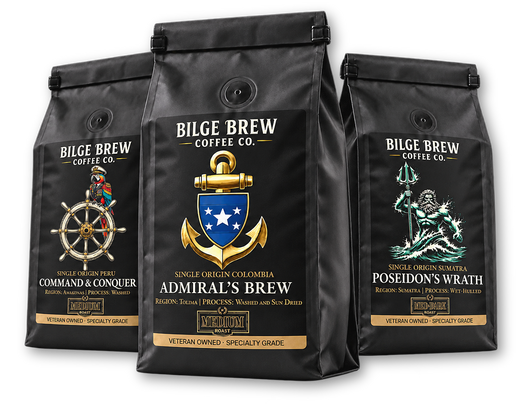
Browse all options here: Bilge Brew coffee roasts.
Nothing beats a strong cup of coffee for early mornings. For those who value more than just a caffeine jolt, a veteran owned coffee brand is worth a look. Enter Bilge Brew Coffee Co. — a Navy-themed delight crafted by those who know what it's like to burn the midnight oil.
Table of Contents
Best Coffee for Early Mornings
Starting your day with the right bean is crucial. If you're up before the sun, consider our SEA WITCH — French Dark Roast. It's bold, rich, and perfect for an eye-opening espresso. French dark roast coffee isn't just for aesthetics; it's a tried-and-tested friend for those needing a strong start.
Best Coffee for Night Shift Workers
Stalking through the night shift? We get it. The best coffee for night shift workers is roasted to order and packs energy into every cup. Bilge Brew’s ALL HANDS — Blonde Espresso Light Roast provides a lighter roast that tastes great and energizes when the clock strikes midnight.
How to Brew Espresso at Home
Brewing espresso at home doesn't need to be rocket science. Have you got a Moka pot? Excellent choice! It’s perfect for crafting deep shots without complicated gadgets. Pair your Moka pot espresso with our best espresso beans for a brilliant start — trust me.
Espresso Troubleshooting
Struggling with your espresso? Too sour or too bitter might mean you're grinding your beans too coarse or too fine. Our all roasts collection offers versatility that works with different brewing techniques. Tweak and find the grind that aligns with your taste.
Best Dark Roast for Espresso
When pondering over the best dark roast for espresso, look no further than French dark roast coffee. It's not just robust; it's a deep dive into flavor. Bilge Brew’s SEA WITCH is made for espresso lovers looking for intensity.
Best Coffee for Nurses and Firefighters
Nurses and firefighters need fuel for those grueling shifts. There's no one-size-fits-all answer, but small batch specialty coffee online is a good bet. Our MESS DECKS — Mexico Single Origin is great for those in service roles who deserve nothing but quality in their cup.
Single Origin vs Blend
Whether you opt for single-origin or blend depends on your preference. Single origins provide a clearer profile from a specific farm or region, like our DRUNKEN SAILOR — Guatemala Single Origin. Blends offer complexity, balancing flavors for a unique experience.
Feeling inspired to try something bold? Check our Single-Serve Cups (K-Cup® Compatible) for convenience and quality in every cup.
Grab your gear and get brewing! There's no better time to taste what a veteran owned coffee brand has to offer. Visit Bilge Brew Coffee Co. today to explore your next favorite roast.
Stay Sharp
Exclusive discountsNew Roasts. Better Coffee. First in Your Inbox.
Exclusive discounts, new drops, early access, and coffee worth knowing about. No spam. No drama.
⚓ You're in. First to know, first to brew.
No drama. Unsubscribe any time.
Veteran-owned. Family roasted. Fresh after order.
Bilge Brew Coffee is built for people who want coffee with flavor, not stale shelf stock.