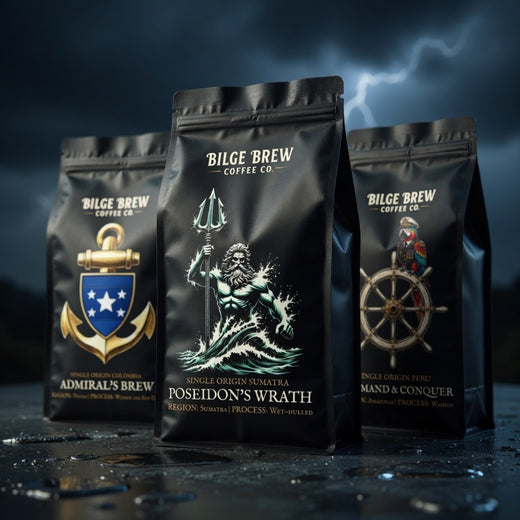
Veteran-Owned Coffee: How to Shop It (Without Getting Played)
More people are searching veteran-owned coffee because they want to support businesses run by people who've served. That's good. But here's the part nobody says out loud: "Veteran-owned" is not automatically a quality stamp.
Some brands earn trust through standards and repeatable quality. Others slap a flag on the bag and hope you won't ask questions. This guide is the simple checklist for buying veteran-owned coffee with confidence — whether you buy from Bilge Brew or anyone else.
If you want the definition without hype: What Veteran-Owned Coffee Actually Means.
Step 1: Verify It's Actually Veteran-Owned
This should be easy, but it isn't. A real veteran-owned coffee company should be willing to say: who owns it and who runs it.
- Is there a real owner page with a name and background?
- Is the person connected to the business publicly — not hidden behind generic "team" copy?
- Do they talk about the business like an operator, not a marketer?
Bilge Brew is clear about this: About the Owner — Navy veteran, registered nurse, founder. No ambiguity.
Step 2: Freshness Is the Biggest Quiet Divider
If you want coffee that tastes alive, you're shopping freshness and storage — not just origin or roast label. Most disappointment comes from buying stale beans without knowing it.
Two quick checks that cut through 90% of marketing:
-
Roast date visible on the bag — not just "best by"
-
Ships fresh after roasting — not pulled from warehouse inventory
If a brand won't show a roast date, it's usually because the date isn't impressive. Plain-English explanation of what roast date actually tells you: Coffee Roast Date Explained.
Why roasted-to-order matters and what it does to the cup: Roasted-to-Order vs Grocery Store Coffee.
Step 3: Watch for These Red Flags
If you see these patterns, you're likely buying a label — not a standard.
-
No roast date on the bag. Non-negotiable red flag.
-
Overdone patriotic branding with zero clarity about the actual coffee — what's the bean, where's it from, what does it taste like?
-
No product organization — everything is "bold" or "smooth" with nothing explained.
-
Big claims with no proof — sourcing claims, quality claims, or origin stories that aren't backed by any specifics.
A veteran-owned business that's proud of the work should be comfortable being judged on the work. If they avoid details, it's usually for a reason.
Step 4: Buy by Your Brew Method, Not by Hype
The simplest way to buy veteran-owned coffee without guessing: choose based on how you brew and what you want the cup to do.
If you brew espresso
If you brew drip every day
If you just want a safe first order
Get a sampler and learn your taste before committing to a full bag: Bilge Brew Crew Sampler Bundle.
Browse everything: Shop all roasts | Not sure where to start: Coffee Finder.
Step 5: Check the Specialty Grade Question
Specialty grade means beans that scored 80+ on the SCA 100-point scale — evaluated for flavor, aroma, body, acidity, and defect count. It's roughly the top 3% of coffee produced globally.
Why it matters when evaluating a veteran-owned brand: specialty grade sourcing costs more and requires real relationships with growers. Commodity-grade beans are cheaper and easier to source. A brand using specialty grade is making a deliberate quality choice — not just slapping a premium price on a commodity product.
Ask the question: does the brand specify what grade they're sourcing? If not, assume commodity. Full breakdown: What Specialty Grade Coffee Actually Means.
What Supporting Veteran-Owned Coffee Should Actually Mean
Supporting veteran-owned coffee isn't charity. It's a choice to back businesses built on accountability and standards. The best ones don't ask for applause. They earn repeat customers through consistency.
If a brand is truly proud of the work, you'll see it: clear owner info, clear product explanations, a coffee lineup built for real use — not just slogans.
For the full story on Bilge Brew specifically — who built it and why: Why I Started a Veteran-Owned Coffee Company.
FAQs
Does veteran-owned coffee automatically mean better coffee?
No. It means you're supporting a veteran-owned business. Quality depends on sourcing standards, freshness handling, and consistency — not the label.
What's the fastest way to avoid buying stale veteran coffee?
Look for a visible roast date on the bag and buy from a brand that roasts to order. If the bag only shows "best by" and hides the roast date, assume it's old. More on this: Coffee Roast Date Explained.
What's the best first buy if I don't know my preferences?
A sampler is the lowest-risk option — you get multiple roasts without committing to a full bag of one you haven't tried. For Bilge Brew: Bilge Brew Crew Sampler Bundle.
How is this post different from the Bilge Brew brand page?
This post is a general buying guide for evaluating any veteran-owned coffee brand. If you want the specific story on Bilge Brew — who founded it, what the product is, and why it exists: Bilge Brew — Veteran Owned Coffee Brand Online.
Do veteran-owned coffee brands donate to veteran causes?
Some do, some don't. Donations don't automatically make the coffee better — and a brand that leads with charity claims but has no transparency on sourcing or freshness is worth scrutinizing. Evaluate the product first. Support the mission second.
Stay Sharp
New Roasts. Better Coffee. First in Your Inbox.
Exclusive discounts, new drops, early access, and coffee worth knowing about. No spam. No drama.
⚓ You're in. First to know, first to brew.
No drama. Unsubscribe any time.