Coffee Roast Date Explained: Why It Matters More Than "Best By"
Here's the blunt truth: roast date tells you how old the coffee is. "Best by" usually doesn't. If your goal is a cup that tastes sweet, punchy, and alive — roast date is the label that matters.
Shop the lineup — all roasts →
Key Takeaways
-
Roast date = freshness. "Best by" is a shelf-life deadline, not a flavor guarantee.
-
Whole bean stays fresh longer than ground coffee. Grind right before you brew.
-
Most coffee goes flat from oxygen and time, not because it "expired."
-
Espresso usually likes a little rest after roasting; drip and pour-over can run sooner.
- If a bag hides the roast date, assume it's older than you want.
Roast Date: The Only "Age" That Actually Helps You
Roast date is the day the beans were roasted. That's it. It's the closest thing to a "born on" date for coffee. After roasting, coffee changes fast: it releases CO2, aroma compounds begin fading, and oxygen slowly wins.
A bag with a roast date two weeks ago and a "best by" twelve months from now tells you two different things. The roast date tells you the coffee is in its active freshness window. The "best by" tells you it won't taste catastrophic for another year. Those are not the same thing.
A practical freshness timeline
| Days off roast |
What to expect |
Best for |
| 0–2 days |
Can brew sharp or gassy. Espresso can channel more easily. |
Usually wait, especially for espresso. |
| 3–14 days |
Peak window for most people: strongest aroma, best balance. |
Drip, pour-over, French press. |
| 7–21 days |
Often the sweet spot for espresso: calmer shots, tighter flavor. |
Espresso (varies by roast and grinder). |
| 22–45 days |
Still drinkable but noticeably less aroma and pop. |
Bigger brews, milk drinks, convenience. |
| 45+ days |
Flat, dull, papery notes show up. This is where sugar and cream start "saving" the cup. |
Only if flavor isn't the priority. |
For the deeper breakdown on freshness, storage, and whole bean vs ground: How Long Coffee Stays Fresh (And Why Most People Drink Stale Coffee).
"Best By" Dates: What They Mean and What They Don't
A "best by" date is a retail shelf-life label. It's designed around warehousing and shipping logistics — "this won't taste horrible by then" — not "this is peak coffee."
-
Whole bean holds up longer than ground — less surface area exposed to oxygen.
-
Pre-ground goes stale fast. If a bag only shows "best by" and no roast date, you're almost always buying old coffee.
- If a brand won't show a roast date, it's usually because the date isn't impressive.
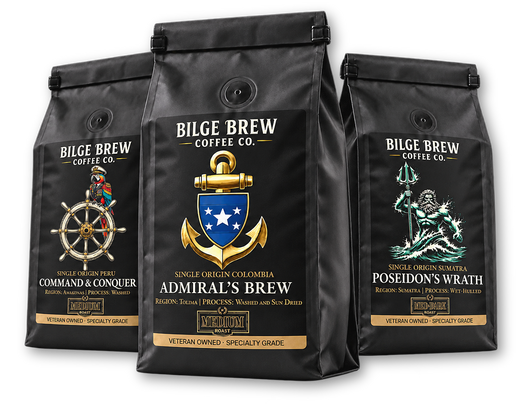
This is exactly why roasted-to-order matters. Your bag is roasted after you place the order — not pulled from shelf inventory and shipped whenever. The roast date is on every Bilge Brew bag. You can check it when it arrives.
Full comparison: Roasted-to-Order vs Grocery Store Coffee.
Packaging and Freshness: What Actually Matters
Coffee stales mainly from oxygen and time. Packaging slows that down — it doesn't stop it. Here's what to look for:
-
One-way valve — lets CO2 gas out without letting oxygen rush in.
-
Opaque multi-layer bag — blocks light and slows oxygen exposure.
-
Strong seal — no leaks, no weak seams.
Once you open the bag, the clock speeds up. Treat it like an opened bottle: still usable, but not indefinitely.
Storage rules that prevent stale coffee
-
Cool, dry, and dark. A pantry beats a countertop next to the stove.
-
Skip the fridge. Moisture and food smells create real problems.
-
Freezer only if you portion it. Freeze in small airtight portions — don't keep reopening the same container.
-
Buy less, more often. The simplest habit that actually works.
Buyer Checklist: How to Stop Buying Stale Coffee
1) Roast date is visible
- No roast date on the bag is a red flag.
- Aim for beans roasted within the last 2–3 weeks.
2) Buy whole bean and grind before brewing
- Whole bean stays fresher significantly longer than pre-ground.
- Grinding days in advance is the fastest way to lose aroma.
- Also — keep your grinder clean. Oil buildup from old grounds is a hidden freshness killer even with a new bag. How to clean a coffee grinder.
3) Match the coffee to how you brew
4) Know your roast level
- Roast level changes how fast coffee extracts and how forgiving it is to brew.
- Roast Level Guide →
5) "Local" doesn't always mean fresh
Cafes can have excellent beans — or slow-moving inventory. Knowing what to look for matters wherever you're buying: Fresh Roasted Coffee Near Me: What to Look For.
Want an easy first order with variety? Bilge Brew Crew Sampler.
FAQs
Does roast date matter more than "best by"?
Yes. Roast date tells you how old the coffee actually is. "Best by" is a conservative shelf-life window built for retail logistics, not peak flavor timing.
How soon after roasting can I brew?
For drip and pour-over, 3–5 days off roast is usually fine. For espresso, wait 7–14 days — excess CO2 right after roasting causes channeling and uneven extraction. The timeline varies slightly by roast level and bean density.
How long do whole beans stay fresh?
Peak flavor: 2–3 weeks off roast in a sealed bag. Still drinkable to 6 weeks. Past that, expect noticeable flavor loss. Grinding fresh daily extends your window significantly compared to pre-grinding the whole bag at once.
Should I store coffee in the fridge or freezer?
Skip the fridge — moisture and food odors are real problems. Freezer can work if you portion into small airtight bags and don't keep thawing and refreezing. For most people buying fresh and using within 2–3 weeks, room temperature storage in a sealed bag is fine.
What's the easiest way to stop buying stale coffee?
Buy from a roaster that shows roast dates, buy whole bean, and don't stockpile. Fresh coffee is mostly a purchasing habit — not a gear problem.
Why does my fresh coffee still taste flat?
Three common causes: grinder needs cleaning (rancid oil residue taints even fresh beans), coffee brewed too soon after roasting (excess CO2), or beans stored somewhere warm and humid. Check roast date, check storage, then check your grinder before blaming the beans.
Stay Sharp
New Roasts. Better Coffee. First in Your Inbox.
Exclusive discounts, new drops, early access, and coffee worth knowing about. No spam. No drama.
⚓ You're in. First to know, first to brew.
No drama. Unsubscribe any time.