Find out why I started Bilge Brew
See our Coffee Roasts Here
How Long Coffee Stays Fresh (And Why Most People Drink Stale Coffee)
Here’s the truth: most coffee doesn’t taste “bad” because your brewer is broken. It tastes bad because it’s stale.
Stale coffee isn’t dangerous. It’s just disappointing: flat aroma, muted flavor, and that weird “papery” finish people think is normal. If you’ve ever said “coffee is coffee” — odds are you’ve been drinking coffee that’s past its best window.
Quick answer (no fluff):
-
Whole bean tastes best for most people in the first 2–4 weeks after roast (often strongest around days ~3–14).
-
Ground coffee starts dropping fast the moment it’s ground — best within minutes, noticeably flatter by the next day.
- Storing coffee in the fridge is usually a mistake. Freezing is only helpful if you do it correctly (portion + airtight + no condensation).
Key Takeaways
- Freshness is ruled by oxygen + time, not vibes.
- Whole beans stay fresh far longer than ground coffee because less surface area is exposed to air.
- “Too fresh” is real: coffee needs a short rest after roasting before it tastes its best.
- Most stale coffee problems come from storage (air/light/heat/moisture) and pre-ground habits.
- Roasted-to-order matters because it reduces the “warehouse and shelf” time that quietly kills flavor.
The 3 clocks that decide if your coffee tastes fresh
People obsess over one thing (“roast date”) and ignore the bigger picture. Freshness is really three timers running at the same time:
-
Time since roasting (degassing → peak → slow fade)
-
Time since opening the bag (oxygen starts winning immediately)
-
Time since grinding (this is the fastest decline by far)
If you want a clean index of the guides that tie all this together, start here: Brew Lab (Guides).
Freshness timeline: Whole bean vs ground (real-world)
| Coffee |
Best taste window |
What you’ll notice when it’s past prime |
|
Whole bean (stored airtight, cool/dark) |
~2–4 weeks after roast for most brew methods (often strongest around days ~3–14) |
Less aroma, flatter sweetness, more “dry” finish |
|
Ground (pre-ground or batch-ground) |
Best within minutes of grinding; noticeably dull by next day
|
“Cardboard”/papery notes, weak aroma, muddy bitterness |
|
Bag opened (whole bean) |
Try to finish within ~2 weeks once opened |
Good coffee still “works” — it just loses the punchline |
Bottom line: if you want the biggest upgrade per dollar, buy whole bean and grind right before brewing. That single habit beats most gear upgrades.
Degassing Timeline (why “too fresh” can taste worse)
Right after roasting, beans release CO2. That’s normal. But it changes how coffee extracts.
-
First 24 hours: many coffees can taste “wild” or uneven because there’s a lot of gas still trapped.
-
Days ~2–7: for most drip / pour-over / French press, this is when coffee often starts tasting more balanced.
-
Espresso: often benefits from a little more rest (commonly ~5–14 days), depending on roast level and your grinder.
If you want the deeper breakdown (with buying tips and what to avoid), link out here: Coffee Roast Date Explained: What It Means + What to Avoid.
Storage Myths (and the simple rules that actually work)
Freshness dies from four enemies: air, heat, light, moisture. Storage is just minimizing those.
Do this:
- Keep beans in the original bag (if it seals well) or an airtight container.
- Store in a cool, dark cabinet (not the counter next to the stove).
- Buy amounts you can finish in a reasonable window, especially once opened.
Avoid this:
-
Fridge storage (odor + moisture risk). Coffee loves to absorb smells.
- Clear containers on the counter in direct light.
- Leaving beans in the grinder hopper for weeks.
What about freezing? Freezing can work, but only if you do it like an adult:
- Freeze in small portions (so you’re not thawing/refreezing constantly).
- Use airtight packaging.
- Let a portion come to room temp before opening (reduces condensation on the beans).
Want the “freshness buying” version of this without marketing noise? Read: Fresh Roasted Coffee: Why It Tastes Better + How to Buy It.
How to tell your coffee is stale (fast)
You don’t need a lab. Use your senses:
-
Smell test: you open the bag and there’s barely an aroma.
-
Taste test: “flat,” “papery,” “woody,” or a bitter finish without real sweetness.
-
Brew behavior: weak bloom in pour-over, thin crema in espresso, lifeless flavor even with correct ratios.
One more sleeper issue: old oils in grinders can make fresh beans taste stale. If your coffee suddenly started tasting “off,” clean the grinder: How to Clean a Coffee Grinder (Step-by-Step).
Why most people drink stale coffee
It’s usually not laziness. It’s a few normal habits that quietly wreck the cup:
- Buying a big bag “because it’s cheaper” and taking two months to finish it.
- Only looking at “best by” dates instead of actual freshness signals.
- Pre-ground convenience (fast decline, every time).
- Storing coffee where it gets hit by heat/light or pulls moisture/odors.
- Thinking bitterness is “strong coffee” and sweetness needs sugar.
If you’re buying online and want a straightforward way to avoid stale beans, read: Fresh Roasted Coffee Near Me: What to Look For So You Don’t Buy Stale Beans.
Why Roasted-to-Order Matters (and why it’s the easiest win)
Most people think “fresh coffee” is a vibe. It’s not. It’s logistics.
Roasted-to-order simply cuts out the long middle stretch where coffee sits around aging in a warehouse, on a shelf, or in a back room. Less dead time = more aroma in the cup.
-
More flavor: aromatics haven’t evaporated away before you even open the bag.
-
More consistency: your dial-in makes sense because the coffee isn’t changing as rapidly from staling.
-
Less guessing: you’re not troubleshooting “bad coffee” that’s really just old coffee.
If you want the full comparison (no hype), read: Roasted to Order vs Grocery Store Coffee: The Real Difference.
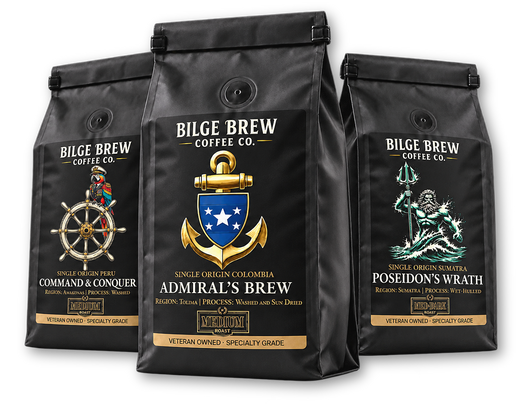
Nothing beats a strong cup of coffee for early mornings. For those who value more than just a caffeine jolt, a veteran owned coffee brand is worth a look. Enter Bilge Brew Coffee Co. — a Navy-themed delight crafted by those who know what it's like to burn the midnight oil.
Table of Contents
Best Coffee for Early Mornings
Starting your day with the right bean is crucial. If you're up before the sun, consider our SEA WITCH — French Dark Roast. It's bold, rich, and perfect for an eye-opening espresso. French dark roast coffee isn't just for aesthetics; it's a tried-and-tested friend for those needing a strong start.
Best Coffee for Night Shift Workers
Stalking through the night shift? We get it. The best coffee for night shift workers is roasted to order and packs energy into every cup. Bilge Brew’s ALL HANDS — Blonde Espresso Light Roast provides a lighter roast that tastes great and energizes when the clock strikes midnight.
How to Brew Espresso at Home
Brewing espresso at home doesn't need to be rocket science. Have you got a Moka pot? Excellent choice! It’s perfect for crafting deep shots without complicated gadgets. Pair your Moka pot espresso with our best espresso beans for a brilliant start — trust me.
Espresso Troubleshooting
Struggling with your espresso? Too sour or too bitter might mean you're grinding your beans too coarse or too fine. Our all roasts collection offers versatility that works with different brewing techniques. Tweak and find the grind that aligns with your taste.
Best Dark Roast for Espresso
When pondering over the best dark roast for espresso, look no further than French dark roast coffee. It's not just robust; it's a deep dive into flavor. Bilge Brew’s SEA WITCH is made for espresso lovers looking for intensity.
Best Coffee for Nurses and Firefighters
Nurses and firefighters need fuel for those grueling shifts. There's no one-size-fits-all answer, but small batch specialty coffee online is a good bet. Our MESS DECKS — Mexico Single Origin is great for those in service roles who deserve nothing but quality in their cup.
Single Origin vs Blend
Whether you opt for single-origin or blend depends on your preference. Single origins provide a clearer profile from a specific farm or region, like our DRUNKEN SAILOR — Guatemala Single Origin. Blends offer complexity, balancing flavors for a unique experience.
Feeling inspired to try something bold? Check our Single-Serve Cups (K-Cup® Compatible) for convenience and quality in every cup.
Grab your gear and get brewing! There's no better time to taste what a veteran owned coffee brand has to offer. Visit Bilge Brew Coffee Co. today to explore your next favorite roast.
Stay Sharp
Exclusive discountsNew Roasts. Better Coffee. First in Your Inbox.
Exclusive discounts, new drops, early access, and coffee worth knowing about. No spam. No drama.
⚓ You're in. First to know, first to brew.
No drama. Unsubscribe any time.
Fresh-roasted coffee
Ready for a better cup?
Explore Bilge Brew coffees roasted after order and built for people who care what lands in the cup.
Shop coffee
Veteran-owned. Family roasted. Fresh after order.
Bilge Brew Coffee is built for people who want coffee with flavor, not stale shelf stock.