Vietnamese Coffee Explained (Plus the Best Vietnamese Iced Coffee Recipe) - Bilge Brew

Vietnamese Coffee Explained (Plus the Best Vietnamese Iced Coffee Recipe)

vietnamese coffee and mug

Vietnamese Coffee Explained (Plus the Best Vietnamese Iced Coffee Recipe)

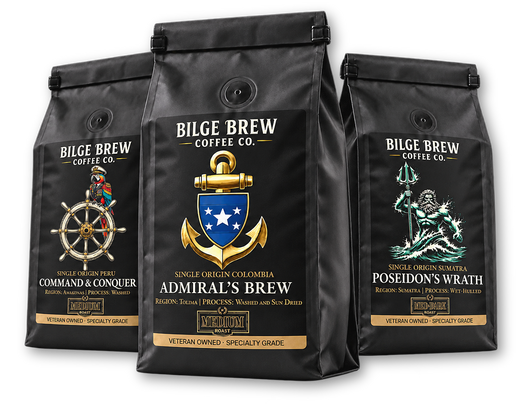
See our collection of best single origin coffee here.

Try our Robusta Here

Vietnamese coffee isn’t subtle, and it’s not supposed to be. It’s bold, rich, and built to pair with sweetness and ice without losing its punch. For most people, the classic image is strong Vietnamese drip coffee slowly brewed through a phin filter and poured over sweetened condensed milk to make Vietnamese iced coffee (cà phê sữa đá). That drink isn’t just a trend, it’s a cultural staple and one of the most recognizable coffee styles in the world.

At Bilge Brew Coffee Co., we love Vietnamese coffee because it’s honest: strong beans, simple equipment, big flavor, no drama.


What makes Vietnamese coffee taste so bold?

The signature intensity usually comes down to three things:

  1. the beans (often Robusta)

  2. the brew method (slow phin drip)

  3. the traditional build (condensed milk + ice for balance)

Vietnamese coffee is designed to be concentrated and full-bodied so it stays flavorful even when sweetened and chilled.


Robusta vs. Arabica: the two beans that matter most

If you want to understand Vietnamese coffee, you need to understand the difference between Robusta coffee beans and Arabica coffee beans. Both are legit, they just play different roles.

Robusta coffee (the powerhouse)

Vietnam is famous for Robusta, and that’s a big reason Vietnamese coffee hits the way it does.

  • Higher caffeine: Robusta typically has significantly more caffeine than Arabica, which translates to a stronger kick.

  • Flavor profile: bold, heavy body, lower acidity, and notes that can read nutty, cocoa-like, earthy, or dark and toasty.

  • Why it fits Vietnamese iced coffee: Robusta’s strength holds up to condensed milk and ice, keeping the drink from tasting watered down.

If you want the classic Vietnamese-style intensity, Robusta is usually the right starting point.

Try our Robusta here.

Arabica coffee (the aromatic, nuanced option)

Arabica is what most specialty coffee drinkers think of first. It’s typically:

  • lower caffeine than Robusta

  • more aromatic, with brighter acidity and fruit/floral notes

  • smoother and more layered when brewed as black coffee

Arabica can absolutely work in a Vietnamese-style recipe, especially if you want a lighter, more aromatic version, but it won’t hit with the same “straight to the point” strength that traditional Robusta delivers.


Why condensed milk is part of the formula

Vietnamese coffee isn’t “Robusta plus sugar” by accident. Sweetened condensed milk balances Robusta’s natural intensity and rounds the edges, turning bold and bitter-leaning notes into something creamy and addictive. That sweet, thick base plus a concentrated drip brew is what gives Vietnamese iced coffee its signature balance.


The best Vietnamese iced coffee recipe (cà phê sữa đá)

What you need

  • 2–3 tablespoons Robusta coffee (or a strong dark roast)

  • 2–4 tablespoons sweetened condensed milk (adjust to taste)

  • Phin filter (ideal) or any slow, strong brewing method

  • Ice

  • Hot water just off boil

How to make it

  1. Add condensed milk to a glass.

  2. Load your phin with coffee, level it, and lightly press the insert (don’t crush it).

  3. Bloom: add a small splash of hot water for 20–30 seconds.

  4. Fill the phin with hot water and let it drip completely (slow is good).

  5. Stir the hot coffee and condensed milk until fully blended.

  6. Pour over a glass packed with ice. Stir again and drink.

Pro tips for better Vietnamese iced coffee

  • Use fresh coffee for stronger aroma and better body.

  • If it drips too fast, grind slightly finer. If it stalls, grind slightly coarser.

  • Robusta shines here because it stays bold even after ice dilution.


Want to explore origin flavors beyond Vietnamese-style?
See our collection of best single origin coffee here.

Vietnamese coffee styles: how it’s actually prepared

Vietnamese coffee isn’t just one drink. Yes, Robusta coffee is the backbone in a lot of traditional recipes, but the way it’s brewed and what gets added creates a whole lineup of Vietnamese coffee styles. Same foundation, different outcomes, depending on the mood, the weather, and what you’re craving.

At Bilge Brew Coffee Co., we respect this part of coffee culture because it’s built on simple tools, strong beans, and a method that actually matters.


Hot Vietnamese coffee

Cà phê đen nóng (hot black Vietnamese coffee)

This is Vietnamese coffee in its most direct form.

How it’s brewed: ground coffee goes into a phin filter (Vietnamese coffee filter), hot water is added, and it drips slowly into a glass.
What it tastes like: strong, full-bodied, and intense. With Robusta, you’ll usually get low acidity, heavier mouthfeel, and a bold finish that doesn’t hide behind sweetness.

This is for people who want the bean to speak for itself.

Cà phê sữa nóng (hot Vietnamese coffee with condensed milk)

Same phin drip, different build.

How it’s brewed: hot coffee from the phin is stirred into sweetened condensed milk.
What it tastes like: rich, creamy, and sweet, but still powered by that concentrated coffee base. The warmth makes it feel extra comforting and dessert-like without needing anything fancy.


Iced Vietnamese coffee: the global favorite

Cà phê sữa đá (Vietnamese iced coffee)

This is the one most people think of first: Vietnamese iced coffee with condensed milk.

Why it works: it’s all contrast done right. Concentrated, bold coffee meets thick condensed milk, then ice keeps it from getting overly sweet or heavy. You end up with a drink that’s creamy, strong, and refreshing at the same time.

Best beans for cà phê sữa đá: a quality Robusta or a Robusta-forward blend is the classic choice because it stays bold after dilution from ice.


Other popular Vietnamese coffee drinks

Cà phê trứng (egg coffee)

A Hanoi classic that sounds strange until you try it.

What it is: strong coffee topped with a whipped foam made from egg yolk, sugar, and condensed milk.
What it tastes like: creamy, custard-like, and sweet, with the coffee giving it structure so it doesn’t feel like straight dessert.

Cà phê cốt dừa (coconut coffee)

A more modern favorite, especially as a cold drink.

What it is: iced coffee blended with coconut milk or coconut cream (sometimes with ice).
What it tastes like: tropical, smooth, and rich, with coconut sweetness balancing the coffee’s intensity.


Why condensed milk is the key ingredient in Vietnamese coffee

Sweetened condensed milk isn’t optional in many Vietnamese coffee drinks, it’s foundational.

  • Flavor balance: it provides sweetness and thick creaminess that offsets the intensity of Robusta-based coffee.

  • Texture: it adds body and a silky mouthfeel you don’t get from regular milk.

  • History: it became popular because it’s shelf-stable and practical in hot climates where fresh dairy was harder to store.


The phin filter: the classic Vietnamese brewing method

The phin is the traditional Vietnamese coffee maker: a small metal filter that sits on top of a glass.

Why it matters: the phin produces a slow, controlled drip that creates a dark, concentrated brew. That concentrate is exactly what you want for Vietnamese coffee recipes, especially anything poured over condensed milk and ice.

The slow drip process pulls more oils and soluble solids, which is part of why Vietnamese coffee tastes so bold and satisfying even with milk and ice.


If you want Vietnamese coffee that tastes the way it’s supposed to, keep it simple: good beans, a phin filter, condensed milk, and patience. That’s the method, and it still holds up.


vietnamese coffee and copper mug

Essential Components: Ingredients and Substitutions

Ingredient Substitution
Butter Margarine, coconut oil, or applesauce
Eggs Flaxseed meal, mashed banana, or silken tofu
Milk Almond milk, soy milk, or coconut milk
Flour Almond flour, coconut flour, or oat flour


Making authentic Vietnamese iced coffee (cà phê sữa đá) at home is absolutely doable. You don’t need fancy gear, but you do need the right fundamentals: bold coffee, sweetened condensed milk, and a brew method that produces a strong concentrate. At Bilge Brew Coffee Co., we keep it simple: if you nail the inputs, the cup takes care of itself.


The must-haves for Vietnamese iced coffee

1) Vietnamese coffee beans (Robusta)

For the classic Vietnamese flavor, Robusta coffee beans are the backbone. Robusta brings the punch: heavier body, lower acidity, and the strength needed to stand up to condensed milk and ice. Dark roasts are common for Vietnamese-style coffee.

2) Sweetened condensed milk

This is the signature ingredient in cà phê sữa đá. It’s thick, sweet, and creamy, and it’s what balances the intensity of Robusta. If you want it authentic, condensed milk is the move.

3) Ice

Don’t under-ice it. Vietnamese iced coffee is meant to be cold and refreshing, and ice also provides the right level of dilution so it doesn’t drink like syrup.


Smart substitutions when you can’t get the original

If you don’t have traditional Vietnamese beans or exact ingredients, you can still get close. Here’s how to substitute without wrecking the drink.

Substitutes for Vietnamese coffee beans

  • Dark roast Robusta: best alternative if you can find it

  • Arabica + Robusta blend: look for a blend with a meaningful Robusta percentage for strength and body

  • Bold, dark roast Arabica (last resort): it can work, especially an espresso-style roast, but it won’t have the same classic Robusta edge. If you use Arabica, keep the brew strong and don’t let extraction get sour.

Substitutes for sweetened condensed milk

  • Evaporated milk + sugar: closest DIY replacement. Start near a 1:1 mix and adjust for thickness and sweetness.

  • Full-fat coconut milk + sugar (dairy-free): creamy and delicious, but it turns the drink into a coconut variation rather than a traditional cà phê sữa đá.


Vietnamese iced coffee with a phin filter: step-by-step

If you want the real experience, use a phin filter (Vietnamese coffee filter). It’s simple, inexpensive, and it makes the right kind of slow-drip concentrate.

What you need

  • Phin filter + heatproof glass

  • 2–3 tbsp coarsely ground coffee (Robusta or Robusta-forward)

  • 2–4 tbsp sweetened condensed milk

  • Hot water (about 195–205°F / 90–96°C)

  • Ice

1) Set up the glass

Add 2–4 tablespoons sweetened condensed milk to the bottom of your glass (more if you like it sweeter).

2) Load the phin

Add 2–3 tablespoons coffee into the phin chamber. Gently shake to level.

3) Add the press and bloom

Place the tamper/press on top of the grounds (light pressure only).
Pour a small splash of hot water to pre-infuse/bloom for about 30 seconds.

4) Fill and drip

Fill the phin with hot water just below the rim. Let it drip slowly into the glass. A typical drip time is 4–5 minutes.

Troubleshooting:

  • Dripping too fast = grind is too coarse

  • Dripping too slow or stalling = grind too fine or coffee packed too tight

5) Stir, then ice

When dripping is done, remove the phin and stir the coffee into the condensed milk until fully mixed.

Fill a tall glass with ice and pour the mixture over it. Stir again and drink.


The goal (and why it works)

Great Vietnamese iced coffee is all about balance: concentrated coffee + condensed milk + ice. Strong, creamy, sweet, and cold, without tasting watered down. Get those pieces right and you’ll have café-level cà phê sữa đá at home.


Vietnamese coffee without a phin: the no-phin method using common tools

No phin filter? You can still make a legit Vietnamese iced coffee (cà phê sữa đá) at home. The goal doesn’t change: brew a strong coffee concentrate, mix it with sweetened condensed milk, then pour it over ice. You’re just using everyday tools to get there.

At Bilge Brew Coffee Co., we’re big on this idea: you don’t need perfect equipment, you need the right approach.


What to use instead of a phin filter

Best options:

  • French press (most consistent for home)

  • Fine-mesh sieve (works in a pinch, takes a little more effort)

  • Pour-over / drip cone (if you can brew it extra strong)

Grind size: go coarse, similar to French press. A coarse grind helps prevent bitterness and keeps filtration manageable.


No-phin Vietnamese coffee: step-by-step

1) Build the condensed milk base

In a heatproof mug or bowl:

  • Add 2–4 tablespoons sweetened condensed milk

  • Add 1–2 ounces hot water

  • Stir until smooth

This warms and loosens the condensed milk so it blends easily with the coffee concentrate.


2) Brew a strong coffee concentrate

Option A: French press Vietnamese coffee

  1. Add 3–4 tablespoons coarsely ground coffee to the French press

  2. Pour in hot water (195–205°F / 90–96°C)

  3. Stir gently

  4. Steep 4 minutes

  5. Press slowly

You’re aiming for a bold, concentrated brew, not a normal-strength cup.

Option B: Fine-mesh sieve method

  1. Place a fine-mesh sieve over a heatproof mug or bowl

  2. Add 3–4 tablespoons coarsely ground coffee into the sieve

  3. Pour hot water over the grounds slowly, a bit at a time

  4. Stir the grounds lightly in the sieve if needed to help extraction

  5. Keep pouring until you’ve brewed a small amount of strong concentrate

This is less controlled than a phin, but it works if you keep the brew volume low and the coffee dose high.


3) Combine and ice

  1. Pour the hot coffee concentrate into your condensed milk base

  2. Stir thoroughly

  3. Fill a tall glass with ice

  4. Pour over ice and stir again

That’s your no-phin cà phê sữa đá.


Bean and roast picks for authentic Vietnamese coffee flavor

Why Robusta matters

Traditional Vietnamese coffee is Robusta-forward for a reason: it’s bold, heavy-bodied, and stands up to condensed milk and ice.

Best choices:

  • 100% Robusta (Vietnam origin if possible): most authentic

  • Robusta-dominant blend: great balance of strength with a touch more aroma

  • Bold dark Arabica (last resort): can work, but won’t match classic Robusta intensity

Roast level that fits Vietnamese iced coffee

  • Medium-dark roast: strong, chocolatey, nutty, without tasting burnt

  • Dark roast: even bolder and lower acidity, but easier to over-extract into bitterness if you push it too far


What to look for on the bag (quick checklist)

  • Origin: Vietnam (or labeled Vietnamese-style)

  • Bean type: Robusta or Robusta-forward blend

  • Roast level: medium-dark or dark

  • Grind: coarse if buying pre-ground (phin/French press style)


Bottom line: even without a phin, you can get the real Vietnamese iced coffee experience. Brew it strong, use condensed milk, ice it hard, and let the coffee stay bold.


FAQ: Vietnamese Coffee Questions People Ask

Vietnamese coffee gets talked about a lot because it tastes different than most “standard” iced coffee. It’s bold, sweet, and built around a specific bean and brew method. Here are the most common Vietnamese coffee FAQs, explained clearly the way we’d break it down at Bilge Brew Coffee Co..


What makes Vietnamese coffee so strong?

Two main reasons:

  • Robusta coffee beans are common in Vietnamese coffee, and Robusta typically has much higher caffeine than Arabica.

  • The traditional phin filter brewing method makes a concentrated drip coffee, which intensifies flavor and caffeine.

That combo is why Vietnamese coffee hits hard and still tastes bold even over ice.


Why is sweetened condensed milk used instead of regular milk?

Sweetened condensed milk is a cornerstone of traditional Vietnamese coffee for both practical and flavor reasons:

  • It’s thick, sweet, and shelf-stable

  • It balances Robusta’s intensity and bitterness

  • It creates the creamy texture people expect in cà phê sữa đá

Regular milk doesn’t deliver the same richness or sweetness in a small, concentrated drink.


Is Vietnamese coffee always sweet?

No. The most famous version is sweet, but Vietnamese coffee comes in multiple styles:

  • Cà phê sữa đá (iced coffee with condensed milk) is sweet and creamy

  • Cà phê đen nóng (hot black coffee) is typically unsweetened and strong

  • Cà phê đen đá (iced black coffee) is also usually unsweetened

So Vietnamese coffee can be sweet, but it doesn’t have to be.


Can I make Vietnamese coffee without a phin filter?

Yes. A phin filter is traditional, but you can still make Vietnamese-style coffee with common tools if you brew it strong:

  • French press (best no-phin option)

  • fine-mesh sieve + careful pouring

  • strong drip coffee brewed extra concentrated

The key is producing a bold coffee base that can stand up to condensed milk and ice.


What’s the difference between Vietnamese iced coffee and other iced coffees?

The difference usually comes down to three things:

  1. Beans: Vietnamese iced coffee often uses Robusta, not just Arabica

  2. Brew method: slow-drip phin coffee creates a concentrate

  3. Dairy: sweetened condensed milk instead of fresh milk or cream

Many other iced coffees use drip coffee or cold brew (often Arabica-based) with fresh milk, so the flavor is usually lighter and less sweet.


Is Vietnamese coffee healthy?

Like any caffeinated drink, it depends on how you make it and how often you drink it.

  • Potential benefits: caffeine can improve alertness and performance

  • Things to watch: traditional cà phê sữa đá can be high in sugar and calories because of condensed milk

If you’re monitoring sugar intake, reduce the condensed milk amount or treat it like an occasional dessert-style coffee.


How do you pronounce “cà phê sữa đá”?

A simple English-friendly pronunciation:
“kah feh soo-uh dah”
Close enough for ordering and conversation, even if tones vary.


Quick Vietnamese coffee FAQs (short answers)

  1. What is Vietnamese coffee and why does it taste so bold?
    Vietnamese coffee is often Robusta-based and brewed with a phin filter, producing a strong, concentrated brew with heavy body and low acidity.

  2. What’s the difference between Robusta and Arabica coffee?
    Robusta: higher caffeine, bolder flavor, heavier body.
    Arabica: more aromatic, more acidity, more nuanced flavor.

  3. What are popular Vietnamese coffee styles?
    Cà phê sữa đá, cà phê đen đá, cà phê sữa nóng, cà phê trứng (egg coffee).

  4. What is cà phê sữa đá and how is it made?
    Vietnamese iced coffee with condensed milk: brew strong coffee (ideally with a phin), stir into condensed milk, pour over ice.

  5. What are common substitutions for Vietnamese iced coffee?
    If needed: use a Robusta blend or bold dark roast coffee, and substitute condensed milk with evaporated milk + sugar or coconut milk + sugar.


If you want Vietnamese coffee that tastes the way it’s supposed to, keep the formula tight: strong coffee, condensed milk, ice, and a concentrated brew. That’s the core of it.

Start making yours today: Try our Robusta Here


Back to blog

Leave a comment

Please note, comments need to be approved before they are published.