Uncle Sam is one of the most recognizable symbols tied to the U.S. government—and especially military recruiting. But who is he, really? And why is he always pointing straight at you? (Image credit: Library of Congress.)
For more than a century, Uncle Sam has been the poster-face of federal authority: star-spangled top hat, hard stare, and that finger aimed like a challenge. The message is always the same—service, duty, enlistment.
So where did Uncle Sam come from? To answer that, you have to go back—way back—to the earliest days of American identity and political cartoons.
Before Uncle Sam: “Brother Jonathan”
Uncle Sam didn’t show up out of nowhere. His earliest “ancestor” is a fictional patriot known as Brother Jonathan. The phrase existed even before the American Revolution. Brother Jonathan’ dates back to the English Civil War as a derogatory label for Puritans and opponents of the crown, and later got applied to American colonists—especially New Englanders—as a political nickname.
Over time, Brother Jonathan became a recognizable figure in editorial cartoons and patriotic messaging—basically an early mascot of the “American type.” (Image credit: New England Historical Society.)
For years, Brother Jonathan was more idea than character. That changed after independence, when illustrators started giving him a consistent look: an older, white-haired New England gentleman—confident, polished, and a little smug. He often wore a top hat and striped pants, which eventually became part of the visual DNA that Uncle Sam inherited.

The Shift: War of 1812 and a New National “Face”
Around the War of 1812, Brother Jonathan began evolving into something else. The country was still young, and it needed symbols that felt broader than “New England gentleman.” This is where the name Uncle Sam enters the story.
The “Uncle Sam” Name: Sam Wilson and the “U.S.” Barrels
The most-cited origin story links ‘Uncle Sam’ to Samuel Wilson, a New York meat supplier during the War of 1812; Congress later recognized him as the progenitor of the national symbol, though the story is still treated as a legend-based attribution.
Once newspapers picked up the story, the name spread. But the image of Uncle Sam still wasn’t locked in. Different artists tried different looks, and the character shifted depending on the era and the message.
The Image Takes Shape: Thomas Nast (Almost)
By the time of the Civil War and after, political cartooning was booming—and Thomas Nast was one of the biggest names in the business. Nast helped define multiple American icons (including modern Santa Claus and the Democratic donkey and Republican elephant).
Nast drew Uncle Sam in the 1870s in Harper’s Weekly, but those versions didn’t fully replace Brother Jonathan in the public imagination. The idea was there, but the “final form” still hadn’t arrived.

The Uncle Sam Everyone Knows: J.M. Flagg and World War I
That final leap happened on July 6, 1916, when illustrator James Montgomery Flagg published a version of Uncle Sam in Leslie’s Weekly with the caption: “What Are You Doing for Preparedness?”
After the U.S. entered World War I, the image was adapted into the recruiting poster that became legendary:
“I Want You for U.S. Army.” (Image credit: Library of Congress.)
![]()
![]()

That poster—and that stare—cemented Uncle Sam as the enduring symbol of U.S. military recruiting. By then, Brother Jonathan was basically retired, and Uncle Sam had become the country’s default “personification” of national duty.
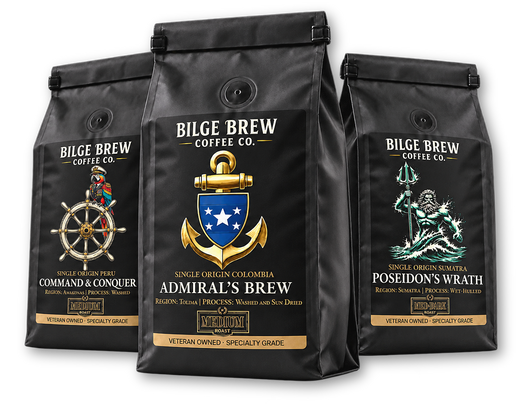
Nothing beats a strong cup of coffee for early mornings. For those who value more than just a caffeine jolt, a veteran owned coffee brand is worth a look. Enter Bilge Brew Coffee Co. — a Navy-themed delight crafted by those who know what it's like to burn the midnight oil.
Table of Contents
Best Coffee for Early Mornings
Starting your day with the right bean is crucial. If you're up before the sun, consider our SEA WITCH — French Dark Roast. It's bold, rich, and perfect for an eye-opening espresso. French dark roast coffee isn't just for aesthetics; it's a tried-and-tested friend for those needing a strong start.
Best Coffee for Night Shift Workers
Stalking through the night shift? We get it. The best coffee for night shift workers is roasted to order and packs energy into every cup. Bilge Brew’s ALL HANDS — Blonde Espresso Light Roast provides a lighter roast that tastes great and energizes when the clock strikes midnight.
How to Brew Espresso at Home
Brewing espresso at home doesn't need to be rocket science. Have you got a Moka pot? Excellent choice! It’s perfect for crafting deep shots without complicated gadgets. Pair your Moka pot espresso with our best espresso beans for a brilliant start — trust me.
Espresso Troubleshooting
Struggling with your espresso? Too sour or too bitter might mean you're grinding your beans too coarse or too fine. Our all roasts collection offers versatility that works with different brewing techniques. Tweak and find the grind that aligns with your taste.
Best Dark Roast for Espresso
When pondering over the best dark roast for espresso, look no further than French dark roast coffee. It's not just robust; it's a deep dive into flavor. Bilge Brew’s SEA WITCH is made for espresso lovers looking for intensity.
Best Coffee for Nurses and Firefighters
Nurses and firefighters need fuel for those grueling shifts. There's no one-size-fits-all answer, but small batch specialty coffee online is a good bet. Our MESS DECKS — Mexico Single Origin is great for those in service roles who deserve nothing but quality in their cup.
Single Origin vs Blend
Whether you opt for single-origin or blend depends on your preference. Single origins provide a clearer profile from a specific farm or region, like our DRUNKEN SAILOR — Guatemala Single Origin. Blends offer complexity, balancing flavors for a unique experience.
Feeling inspired to try something bold? Check our Single-Serve Cups (K-Cup® Compatible) for convenience and quality in every cup.
Grab your gear and get brewing! There's no better time to taste what a veteran owned coffee brand has to offer. Visit Bilge Brew Coffee Co. today to explore your next favorite roast.
Stay Sharp
Exclusive discountsNew Roasts. Better Coffee. First in Your Inbox.
Exclusive discounts, new drops, early access, and coffee worth knowing about. No spam. No drama.
⚓ You're in. First to know, first to brew.
No drama. Unsubscribe any time.
Veteran-owned. Family roasted. Fresh after order.
Bilge Brew Coffee is built for people who want coffee with flavor, not stale shelf stock.