The Ultimate Guide to Moka Pot Coffee (Italian Moka Pot Brewing That Actually Tastes Good)
If you want “espresso-style” coffee at home without a counter-hogging machine, the moka pot is the move. It’s simple, durable, and when you run it right, it makes a bold, syrupy cup that sits between drip coffee and true espresso.
I’m writing this as Bilge Brew Coffee Co. because moka pots are one of the most honest brewers out there: they don’t hide bad inputs. Grind, heat, water level, and coffee freshness show up in the cup—fast.
What Is an Italian Moka Pot (and why it’s not true espresso)
A moka pot is a stovetop brewer that uses steam pressure to push hot water up through coffee grounds into a top chamber.
-
It is not true espresso. Espresso machines run much higher pressure.
-
It is “moka coffee”—strong, concentrated, and perfect straight or cut with hot water or milk.
If you treat moka like espresso, you’ll usually overdo the grind and heat and end up with bitterness. If you treat it like its own method, it’s money.
Moka Pot Coffee Maker Basics: parts, pressure, and what’s happening inside
A standard moka pot has 3 parts:
-
Bottom chamber (boiler): water goes here
-
Filter basket (funnel): coffee grounds go here
-
Top chamber: finished coffee collects here
As water heats, pressure builds in the bottom chamber and forces water up through the coffee bed into the top. Your job is to keep that flow steady and controlled, not explosive.
Choosing a Moka Pot That Matches Your Stove
If you’re shopping, here are solid options people actually use (and why):
-
Classic aluminum (iconic, fast heating): the standard Bialetti is a safe pick for gas/electric coils.
-
Induction stove? Get stainless (or use an induction plate).
- Want a little more “crema-like” foam? The Brikka is designed for that style.
-
Budget stainless option that still does the job:
Sizing tip: “Cup” ratings are small servings (Italian-style). If you want 2 full mugs, you usually need a bigger size than you think.
The Coffee That Wins in a Moka Pot
Moka pots reward coffees that stay sweet under heat and pressure. In real-world use, medium-dark to dark tends to be the easiest path to a rich cup.
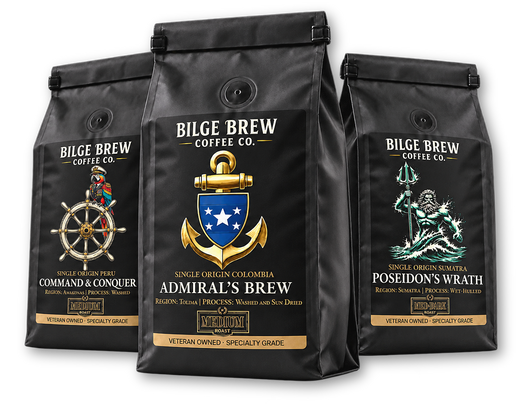
Here are four Bilge Brew coffees that fit moka brewing well (pick based on what you like):
Rule: moka tastes best when the coffee is fresh. Old coffee turns flat fast and bitterness shows up easier.
Grind Size for Moka (This Is Where Most People Blow It)
Forget “espresso fine.” That’s the fastest way to choke a moka pot and scorch a batch.
Grind Size for Moka Pot Espresso = (not espresso-fine)
Target grind:
- Finer than drip
- Coarser than espresso
- Think: fine sand / table salt (not powder)
If it’s bitter: grind a touch coarser or lower the heat.
If it’s weak: grind slightly finer or make sure you’re filling the basket fully.
Water Level and Temperature: The No-Drama Standard
Water level
Fill the bottom chamber up to the safety valve.
- Don’t cover the valve.
- Don’t underfill unless you’re intentionally changing strength.
Water temperature
You have two valid approaches:
-
Hot/near-boiling water start: reduces the time grounds sit on heat (often cleaner taste)
-
Room-temp start: slower ramp, easier to manage if you’re new
Both work. The key is controlling the heat so the brew doesn’t rush.
Step-by-Step: How to Brew a Clean, Strong Moka Pot Cup
1) Prep
- Fill boiler with water to the valve
- Insert basket
- Fill basket to the top
-
Level it with a finger or light tap
✅ Do NOT tamp.
Tamping restricts flow and drives bitterness.
2) Assemble
- Wipe any loose grounds off the rim/threads
- Screw together firmly (good seal matters)
3) Heat (the most important part)
- Use medium-low heat
- Keep the handle out of direct flame
- If you’re on induction, match the burner size to the pot base
You want a steady, calm extraction, not a rocket launch.
4) Watch the flow
- Coffee should rise as a smooth stream
- When it starts to turn pale/blonde and sputter, pull it off the heat
5) Stop the brew
To avoid the harsh “end phase”:
- Remove from heat, and/or
- Briefly cool the bottom chamber under running water (quick stop)
6) Stir and serve
Stir the top chamber before pouring. The first part of the brew is stronger than the last—stirring evens it out.
Quick Ratios and Strength Control (Simple, Repeatable)
Because basket sizes vary, moka is easier as a fixed-dose method:
-
Water: to the valve
-
Coffee: fill basket to the top, level only
-
Strength control: mostly comes from grind + heat + stopping point
Want it less intense? Add a splash of hot water to your cup (moka “Americano” style).
Want it latte-ready? Use a darker roast and add steamed/frothed milk.
Troubleshooting: Fix the Common Moka Pot Failures
Bitter / burnt
Most common causes:
- Heat too high
- Grind too fine
- Letting it sputter too long
Fix:
- Lower heat, coarsen grind slightly, pull earlier
Weak / watery
Most common causes:
- Grind too coarse
- Not filling the basket fully
- Loose seal / gasket issue
Fix:
- Slightly finer grind, fill basket, check gasket and tighten
Leaking steam from the side
- Dirty rim/threads
- Old gasket
Fix:
- Clean contact points, replace gasket if stiff/cracked
Coffee tastes metallic or “off”
- New aluminum pot needs a few seasoning brews
- Soap residue (common mistake)
Fix:
- Brew 2–3 “throwaway” batches in a new pot; rinse only, no soap
Cleaning and Maintenance (Keep It From Going Bilge-Mode)
Daily: rinse with warm water and dry fully.
- Skip soap unless you really need it—and if you use it, rinse like you mean it.
Weekly check:
- Inspect gasket (pliable, not cracked)
- Make sure the filter screen holes aren’t clogged
Occasional deep clean:
- Hot water rinse + a soft brush
- If you have scale buildup, a mild descaling rinse can help—then rinse thoroughly and brew a test batch.
Safety Notes People Ignore (Don’t Be That Guy)
- Don’t overfill past the safety valve
- Don’t use high heat “to go faster”
- Don’t leave it unattended
- Make sure the valve is clear and the gasket is in good condition
FAQ
Is moka pot coffee espresso?
No. It’s a concentrated stovetop brew with lower pressure than espresso. It can taste espresso-like, especially with darker roasts, but it’s its own method.
If you're looking for espresso, check our curated line-up here.
If you want to learn how to pick your espresso: start here.
Should I tamp moka pot coffee?
No. Level only. Tamping increases resistance and pushes the brew toward bitter, harsh extraction.
What grind size is best for moka pots?
Finer than drip, coarser than espresso—think fine sand/table salt.
Why does my moka pot sputter?
Sputtering usually happens at the end of the brew when the bottom chamber runs low and steam blasts through. Pull it earlier and cool the base to stop extraction.
Can I use a moka pot on induction?
Yes, if it’s stainless and induction-compatible (or you use an induction adapter plate). Stainless models are the easy answer.
Is moka pot espresso the same as espresso?
Can you make espresso with a moka pot?
What grind size is best for moka pot coffee?
What’s the best Italian moka pot for daily use?
Is a Bialetti moka pot worth it?
Should I buy a stainless steel moka pot or aluminum?
What is a moka pot coffee maker and how does it work?
Why does my moka pot taste bitter?
A Simple “Start Here” Setup (If You Want Zero Guesswork)
No shortcuts. Control the heat. Pull it before it goes blonde. That’s how you get moka coffee that hits hard without tasting scorched.
“Best Coffee for Moka Pot Brewing (Bilge Brew Moka Roasts)”
- These are our personal picks for Moka Pot Coffee
Nothing beats a strong cup of coffee for early mornings. For those who value more than just a caffeine jolt, a veteran owned coffee brand is worth a look. Enter Bilge Brew Coffee Co. — a Navy-themed delight crafted by those who know what it's like to burn the midnight oil.
Table of Contents
Best Coffee for Early Mornings
Starting your day with the right bean is crucial. If you're up before the sun, consider our SEA WITCH — French Dark Roast. It's bold, rich, and perfect for an eye-opening espresso. French dark roast coffee isn't just for aesthetics; it's a tried-and-tested friend for those needing a strong start.
Best Coffee for Night Shift Workers
Stalking through the night shift? We get it. The best coffee for night shift workers is roasted to order and packs energy into every cup. Bilge Brew’s ALL HANDS — Blonde Espresso Light Roast provides a lighter roast that tastes great and energizes when the clock strikes midnight.
How to Brew Espresso at Home
Brewing espresso at home doesn't need to be rocket science. Have you got a Moka pot? Excellent choice! It’s perfect for crafting deep shots without complicated gadgets. Pair your Moka pot espresso with our best espresso beans for a brilliant start — trust me.
Espresso Troubleshooting
Struggling with your espresso? Too sour or too bitter might mean you're grinding your beans too coarse or too fine. Our all roasts collection offers versatility that works with different brewing techniques. Tweak and find the grind that aligns with your taste.
Best Dark Roast for Espresso
When pondering over the best dark roast for espresso, look no further than French dark roast coffee. It's not just robust; it's a deep dive into flavor. Bilge Brew’s SEA WITCH is made for espresso lovers looking for intensity.
Best Coffee for Nurses and Firefighters
Nurses and firefighters need fuel for those grueling shifts. There's no one-size-fits-all answer, but small batch specialty coffee online is a good bet. Our MESS DECKS — Mexico Single Origin is great for those in service roles who deserve nothing but quality in their cup.
Single Origin vs Blend
Whether you opt for single-origin or blend depends on your preference. Single origins provide a clearer profile from a specific farm or region, like our DRUNKEN SAILOR — Guatemala Single Origin. Blends offer complexity, balancing flavors for a unique experience.
Feeling inspired to try something bold? Check our Single-Serve Cups (K-Cup® Compatible) for convenience and quality in every cup.
Grab your gear and get brewing! There's no better time to taste what a veteran owned coffee brand has to offer. Visit Bilge Brew Coffee Co. today to explore your next favorite roast.
Stay Sharp
Exclusive discountsNew Roasts. Better Coffee. First in Your Inbox.
Exclusive discounts, new drops, early access, and coffee worth knowing about. No spam. No drama.
⚓ You're in. First to know, first to brew.
No drama. Unsubscribe any time.